When Is Father’s Day in Italy?
Italy celebrates Father’s Day, known as Festa del Papà, on 19 March — not the first Sunday of September, as in Australia. The two countries are marking the same idea six months apart, and the reason for Italy’s date has nothing to do with spring or the calendar quarter. It comes down to a saint.
At 170 Grammi’s Roman pizzeria in Surry Hills, the Roman food tradition behind the menu goes well beyond pizza dough — it stretches to how Italians structure their year around food and family. Father’s Day is one of the clearest examples: an entire tradition of pastries, family lunches and a specific patron saint, built around a date most people outside Italy have never heard of.
Why 19 March? The Feast of San Giuseppe
Festa del Papà falls on 19 March because it’s the feast day of San Giuseppe — Saint Joseph — the patron saint of fathers in the Catholic calendar. Joseph is remembered in Christian tradition as the earthly father of Jesus: a carpenter, a provider, and the model of quiet, steady fatherhood. Pairing his feast day with a celebration of fathers is not an Italian invention specifically, but Italy is where the custom has stuck hardest and lasted longest, folded into the wider culture of family meals that defines how the country marks almost every occasion.
Rome’s Frittellaro Saint
In Rome specifically, San Giuseppe carries an older nickname: Il Frittellaro — the fritter saint. One version of the story ties this to San Giuseppe’s flight into Egypt with Mary and the infant Jesus, where he is said to have sold fried dough to support the family in a foreign land. Another traces it further back, to ancient Rome’s Liberalia festival, when wheat fritters cooked in boiling lard were eaten in abundance as part of the celebration — a tradition Romans folded into the saint’s day once the two dates lined up on the calendar.
Either way, the nickname has outlasted the myth. Rome takes its frying seriously on 19 March, and the pastries are the reason the date is remembered at all.
What Are Zeppole di San Giuseppe?
Zeppole di San Giuseppe are the pastry at the centre of the day: rounds of choux pastry, fried or baked, filled with vanilla pastry cream, dusted with icing sugar and finished with a single amarena cherry on top. Bakery windows across Italy fill with them in the lead-up to 19 March, and in Rome and further south, some households make frittelle di San Giuseppe instead — smaller, simpler fried dough balls, sometimes flavoured with citrus or raisins, closer to the Liberalia fritters that gave the saint his nickname in the first place.
Neither pastry has much in common with anything on a pizza menu, but the instinct behind them will be familiar to anyone who has eaten Roman food: a specific dish, made a specific way, tied to a specific date, and non-negotiable once the day arrives.
Sicily Does It Differently: La Tavola di San Giuseppe
Sicily marks the same date with an entirely different tradition — La Tavola di San Giuseppe, or St Joseph’s Table, a custom that has nothing in common with Rome’s fried pastries beyond the date. According to Sicilian legend, the tradition began during a medieval famine, when the island prayed to San Giuseppe for rain and promised a feast in his honour if it came. It did, and the table has been set every 19 March since: a three-tiered altar of meatless dishes — no meat, because the feast falls during Lent — built around blessed fava beans, sesame-crusted breads, and breadcrumbs standing in for the sawdust of Joseph’s carpentry trade. Tradition holds that no one can be turned away from a St Joseph’s Table, and children representing the Holy Family eat first.
It’s a useful reminder that “Italian food” isn’t one thing with one set of rules — Rome fries, Sicily builds an altar, and neither region would call the other’s version definitive. It’s the same principle behind keeping La Tonda Romana specific to Rome rather than folding it into a generic “Italian pizza” category.
A Public Holiday No Longer, a Tradition Still
Festa del Papà was an official public holiday in Italy until 1977, when a change to the law removed San Giuseppe’s Day from the list of paid days off, along with several other religious feast days. Italians still go to work on 19 March. But the date never moved, and the tradition never faded — families still gather for a meal, bakeries still sell out of zeppole, and fathers are still, for one day, the reason for the table. It is a rare case of a celebration outliving the public holiday that used to support it.
Two Dates, One Idea: Celebrating Dad at the Table
Australia’s Father’s Day lands on the first Sunday of September — this year, 6 September 2026 — a full six months from Italy’s date and rooted in a completely different calendar history. But the instinct underneath both occasions is identical: clear a table, gather the family, and let a proper meal do the talking rather than a card or a gift.
That instinct is the whole premise behind Father’s Day at 170 Grammi in Surry Hills. There’s no set Father’s Day menu forced on the table — the full dine-in menu is on, so everyone orders what they actually want, or the table can take the easier route with one of the set menus and let the courses keep arriving. Either way, it’s the same idea Rome has been running with since San Giuseppe’s day was still a public holiday: a family meal is the gift.
Celebrating Father’s Day the Roman Way in Surry Hills
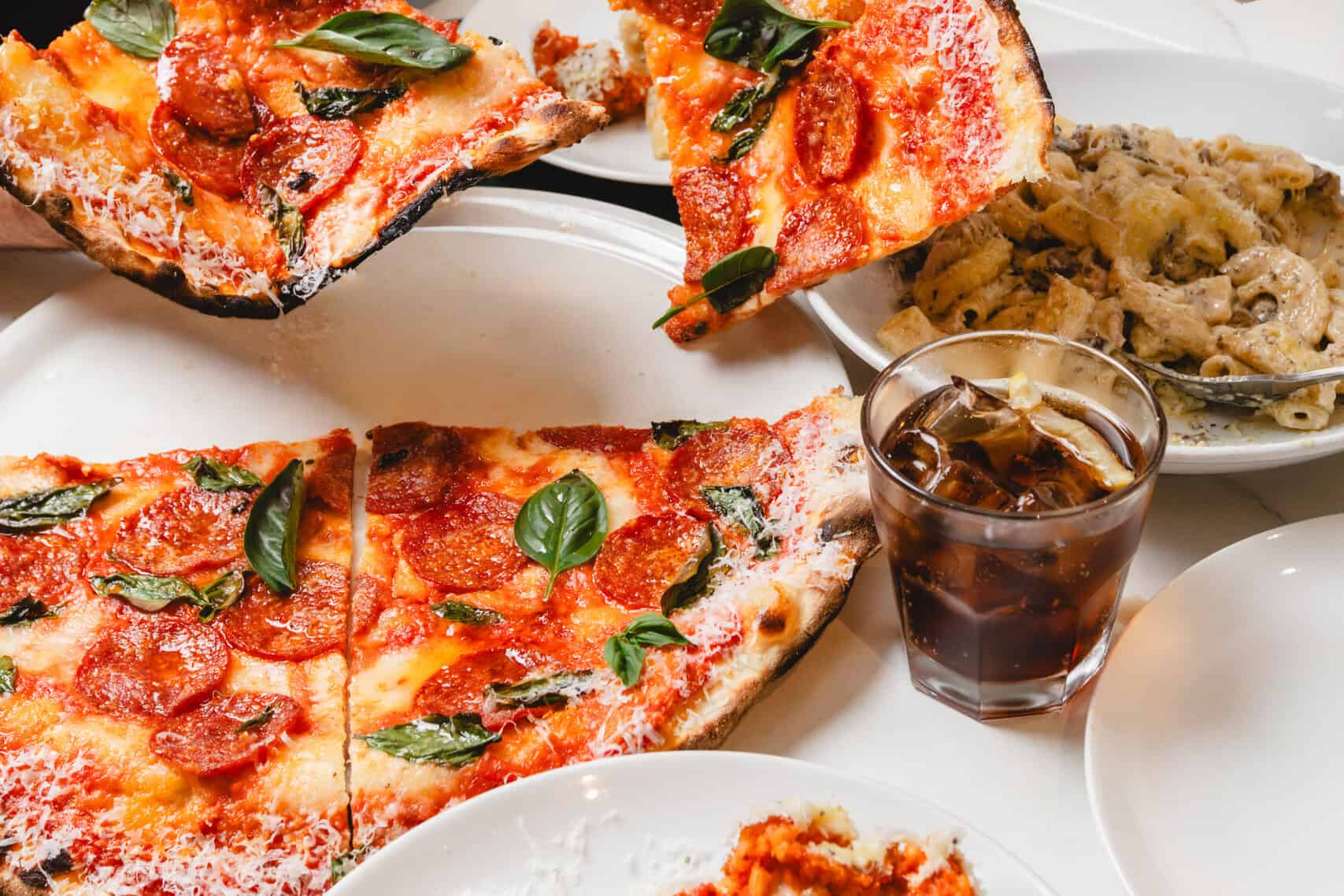
170 Grammi, a Roman pizza restaurant at 428 Crown Street, Surry Hills NSW 2010 in Sydney, has been making Roman-style pizza since 2024 — thin, high-hydration dough started at exactly 170 grams and baked in a 1.9-tonne oven handmade in Italy, under Luigi Esposito, a pizzaiolo with over 35 years of experience. It’s not the Festa del Papà tradition, but it’s built on the same underlying idea: a technique done properly, without shortcuts, because that’s simply how it’s done.
Sunday 6 September falls on 170 Grammi’s lunch-and-dinner day and is one of the busiest Sundays of the year on the Surry Hills calendar, so a booking well ahead of time is worth making. Larger families or groups celebrating together can also look at group dining at 170 Grammi — the venue’s indoor and outdoor seating suits a bigger table, and a set menu takes the ordering out of anyone’s hands if the group would rather not choose individually. For anyone who can’t make it in on the day itself, a 170 Grammi gift card is a straightforward way to mark the occasion regardless of the date.
Book Father’s Day at 170 Grammi →
Frequently Asked Questions
When is Father’s Day in Italy?
Father’s Day in Italy, called Festa del Papà, is celebrated on 19 March every year. This is different from Australia’s Father’s Day, which falls on the first Sunday of September.
Why do Italians celebrate Father’s Day on 19 March?
Italians celebrate Father’s Day on 19 March because it is the feast day of San Giuseppe (Saint Joseph), the patron saint of fathers in the Catholic calendar. The date has been linked to fatherhood in Italy for centuries, well before it became a modern Father’s Day tradition.
What does Il Frittellaro mean?
Il Frittellaro, meaning “the fritter saint,” is a Roman nickname for San Giuseppe. It refers to fried pastries traditionally eaten on his feast day, with roots that some trace back to Ancient Rome’s Liberalia festival, when wheat fritters were fried in boiling lard as part of the celebration.
What are zeppole di San Giuseppe?
Zeppole di San Giuseppe are traditional Italian pastries made from fried or baked choux pastry, filled with vanilla pastry cream, dusted with icing sugar and topped with an amarena cherry. They are eaten across Italy on 19 March to mark Festa del Papà.
What is La Tavola di San Giuseppe?
La Tavola di San Giuseppe, or St Joseph’s Table, is a Sicilian tradition observed on 19 March, separate from Rome’s zeppole custom. It is a three-tiered altar of meatless dishes — including blessed fava beans and sesame-crusted breads — shared with the community, with tradition holding that no one may be turned away from the table.
Is Festa del Papà still a public holiday in Italy?
No. Festa del Papà was an official public holiday in Italy until 1977, when a change in law removed San Giuseppe’s Day from the list of paid public holidays. Italians still work on 19 March, but the day is still widely celebrated with family meals and pastries.
When is Father’s Day in Australia?
Father’s Day in Australia is celebrated on the first Sunday of September each year. In 2026, this falls on Sunday 6 September.
Where can I celebrate Father’s Day with Roman-style pizza in Surry Hills?
170 Grammi Pizzeria at 428 Crown Street, Surry Hills is open for Father’s Day lunch and dinner on Sunday 6 September 2026, with the full dine-in menu available. Bookings can be made through the 170 Grammi Father’s Day event page.

170 Grammi is Surry Hills’ home of authentic Roman-style pizza, founded by Naples-born pizzaiolo Luigi Esposito. Where Luigi’s other restaurants bring the traditions of Naples to Sydney, 170 Grammi is dedicated to the Roman counterpart — La Tonda Romana — defined by thin, high-hydration dough, long fermentation and a clean, structured crunch that sets it apart from softer southern styles.
Opened in 2024 at 428 Crown Street and already one of the most-searched pizza restaurants in Surry Hills, 170 Grammi has quickly established itself as Sydney’s leading destination for Roman-style pizza. This blog covers the craft and culture behind what makes Roman pizza distinct — from dough technique and fermentation to menu guides, Roman food traditions and what to look for in a genuinely authentic slice.