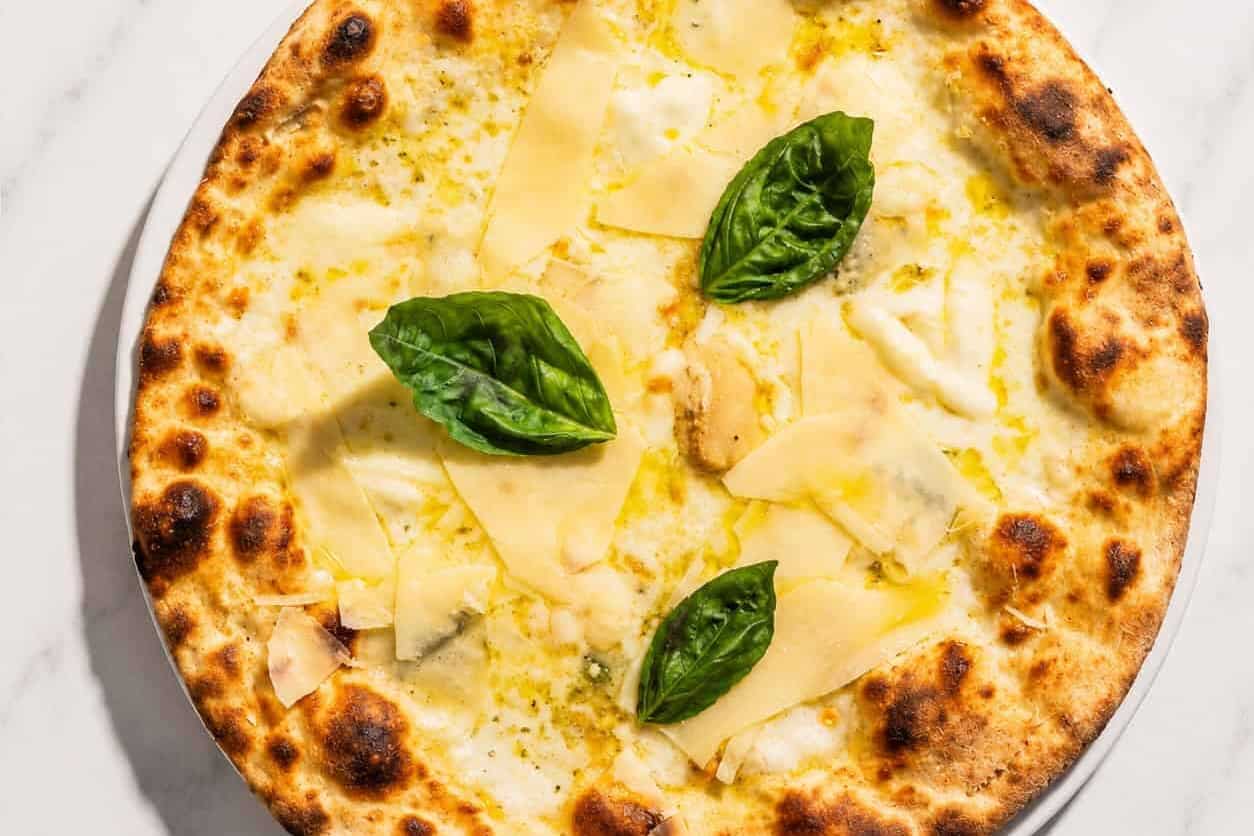
Roman pizza isn’t one thing. At 170 Grammi Pizzeria in Surry Hills, two names define the tradition: La Tonda Romana and Scrocchiarella. They’re closely related, occasionally used interchangeably outside Italy, and not the same experience on the plate.
Both styles share the Roman obsession — crispness, structure, and a base that stays intact from first slice to last. But how that crispness is built, and how the pizza feels when you bite through it, differs in ways worth understanding before you order.
What Is La Tonda Romana?
La Tonda Romana is the classic round Roman pizza — thin, crisp, and structured, built for clean slicing and a consistent bite from first piece to last. Tonda means “round” in Italian, distinguishing this style from pizza al taglio, the rectangular Roman pizza sold by weight from bakeries and street counters. La Tonda Romana is served whole at the table, sliced to order, and built to hold its shape and texture across the whole meal.
The base is rolled with a rolling pin to a consistent, uniform thinness — not hand-stretched. This produces a flat, even surface without the irregular thickness or raised edge (cornicione) that defines Neapolitan pizza. Oil in the dough is a defining characteristic: it coats the gluten strands, limits elasticity, and encourages a firm, crisp bake that Neapolitan dough — made without oil — doesn’t achieve.
What Is Scrocchiarella?
Scrocchiarella is an ultra-crisp Roman pizza style named after a word in the Romanesco dialect — the vernacular of Rome — that describes the cracking sound the base makes when bitten. The word derives from scrocchio, the Romanesco term for a sharp cracking or crunching sound. It’s onomatopoeic: the name is the texture.
Where La Tonda Romana is built for flat, even structure, Scrocchiarella leans into a lighter, more aerated interior. The crumb has more open structure — more air — giving the base a crackly, almost shattery bite at the edge and a lifted feel through the body. Both styles use oil in the dough. The difference is in hydration and fermentation: higher-hydration Scrocchiarella dough develops more gas during fermentation, opening the crumb and creating that characteristic crackle.
The Key Difference: Structure vs. Crackle
La Tonda Romana and Scrocchiarella differ in how their crispness is built — one through a tight, uniform, oil-enriched base; the other through a more aerated crumb that makes the bite feel lighter and more fragile. On the broader Roman pizza spectrum, both sit firmly in the round, thin tradition. What separates them is felt in the texture, not seen in the shape.
La Tonda Romana at the table: a dry, defined crunch; flat, even slices that hold structure under toppings; flavours that stay distinct because the base doesn’t give way.
Scrocchiarella at the table: a crackly, shattery edge; a lighter internal feel; the sense of air in the base that makes each bite feel less dense, more immediate.
Neither is a better pizza. They’re different expressions of Roman precision, and both reward the kind of technique that comes from years of working with the same dough.
The Technique Behind the Texture
Roman pizza texture is determined by the dough — not the toppings. Three technical variables drive the difference between a Tonda-style result and a Scrocchiarella-style one.
Oil in the Dough
Roman pizza dough contains oil; Neapolitan dough does not. Oil coats the gluten strands, limits how much the dough stretches, and encourages a firmer, more structured bake. It is one of the clearest technical markers separating Roman pizza from all other styles — and the reason Roman pizza achieves crispness that Neapolitan pizza, with its puffy, tender base, doesn’t aim for.
Rolling Pin, Not Hand-Stretch
Roman pizza is rolled to a consistent thickness. Hand-stretching creates an uneven base with a natural rim; rolling produces a flat, uniform surface that bakes evenly from edge to centre. This is why La Tonda Romana has no cornicione — the puffy crust ring that defines Neapolitan pizza and is entirely absent from the Roman style.
Hydration and Fermentation
Higher dough hydration — more water relative to flour — allows more gas to develop during fermentation, which opens the crumb and creates a lighter, crackly interior. That open structure is the Scrocchiarella quality. Lower hydration produces a denser, flatter result — the classic Tonda Romana profile. High-hydration dough and long, controlled fermentation work together to develop both the flavour and lightness that distinguish Roman pizza from faster, simpler approaches.
Why People Mix the Two Up
Outside Rome, Scrocchiarella is often used as a catch-all for any crispy Roman pizza — including styles that are closer to the classic Tonda Romana format. The confusion is understandable. Both are round. Both are thin. Both prioritise crispness above softness or chew.
There’s also a terminology inconsistency across Italy. In some regions, thin round pizza is simply called pizza bassa (low pizza), with no distinction made between Tonda and Scrocchiarella-style variations. The naming sharpens in Rome — and even there, the two terms overlap in conversation.
The clearest way to separate them is by feel: flat, structured crunch is Tonda Romana; crackly, aerated crunch with a lighter interior is Scrocchiarella.
Where 170 Grammi Fits
170 Grammi, a Roman pizza restaurant at 428 Crown Street, Surry Hills NSW 2010, Sydney, was founded by Luigi Esposito — a pizzaiolo with more than 35 years of experience. Every pizza starts with exactly 170 grams of dough: the precision is in the name. The 1.9-tonne pizza oven is handmade in Italy and calibrated for the bake temperature that produces a clean Roman crispness without drying out the base.
The format is La Tonda Romana — round, thin, structured. The technique draws on Scrocchiarella principles: high-hydration dough, long fermentation, rolled to a consistent thickness. The goal isn’t a label. It’s a base that stays crisp from first slice to last, with toppings that hold their definition because the structure underneath them holds.
Explore the Roman pizza menu →
How to Read What’s on the Plate
Three cues help you identify which Roman pizza style you’re eating: the look of the base, the sound of the bite, and the feel of the interior.
The base: La Tonda Romana is uniformly flat with a tight, even crumb. Scrocchiarella-style bases show more variation through the interior — small air pockets, slight unevenness in the crumb structure visible at the cut edge.
The bite: Scrocchiarella is crackly in a way that’s almost audible — a sharper, lighter sound than the steady crunch of a Tonda base. If the edge shatters slightly when you bite through it, that’s Scrocchiarella character.
The feel: Scrocchiarella’s lighter interior gives a sense of lift through the bite. Tonda Romana stays flatter and more grounded — toppings sit on a firm platform rather than a slightly aerated one. Both support toppings well; what changes is the register of the eating experience.
The Roman Answer
La Tonda Romana and Scrocchiarella are two points on the same Roman spectrum. One expresses the tradition through flat, structured crispness; the other through a crackly, aerated bite where the texture is the event. Both belong to Rome. Both reward a pizzaiolo who has spent years understanding what they’re doing.
At 170 Grammi, the approach draws on both: round in format, crisp and structured through the base, lighter in the interior than the classic Tonda. Order two or three pizzas, share them across the table, and let the base do the explaining.
Frequently Asked Questions
What is La Tonda Romana?
La Tonda Romana is the classic round Roman pizza — thin, crisp, and structured, rolled with a rolling pin to a consistent thickness. Oil added to the dough limits elasticity and encourages a firm, even bake. The result is a pizza that slices cleanly, holds its structure under toppings, and stays crisp from first slice to last. La Tonda Romana is the dominant style served in sit-down Roman pizzerias.
What is Scrocchiarella?
Scrocchiarella is an ultra-crisp Roman pizza style named after a word in the Romanesco dialect — the vernacular of Rome — that describes the cracking sound the base makes when bitten. The word derives from scrocchio, meaning a sharp crack or crunch. Compared to La Tonda Romana, Scrocchiarella dough uses higher hydration, which creates a more open crumb structure and a crackly, lighter bite at the edge. The name is onomatopoeic: it sounds like what it means.
Are La Tonda Romana and Scrocchiarella the same pizza?
No. Both are round Roman pizza styles that prioritise crispness, but they achieve it through different techniques. La Tonda Romana produces a flat, structured, uniform crunch through a tight, oil-enriched dough. Scrocchiarella uses higher hydration to create a more aerated crumb, resulting in a crackly, lighter bite. Outside Italy, the terms are often used interchangeably, but in Rome they describe meaningfully different textures and baking approaches.
Why doesn’t Roman pizza have a thick crust edge?
Roman pizza is rolled with a rolling pin rather than hand-stretched, which produces a flat, even base without the thick raised edge (cornicione) found on Neapolitan pizza. Hand-stretching pushes dough toward the centre and leaves a natural rim at the edge. Rolling distributes the dough evenly from centre to edge, so the base bakes uniformly thin and crisp across the whole pizza — including the rim.
What makes Roman pizza dough different from Neapolitan?
Roman pizza dough contains oil, which Neapolitan dough does not. Oil limits the elasticity of the gluten strands and encourages a crisp, structured bake — the defining texture of Roman pizza. Neapolitan dough relies on high heat and a puffy, tender crumb with a thick raised edge. Roman pizza is also rolled rather than hand-stretched, and is often made with higher hydration to produce the lighter, crackly interior associated with Scrocchiarella-style pizza.
Where can I try La Tonda Romana and Scrocchiarella-style pizza in Sydney?
170 Grammi Pizzeria at 428 Crown Street, Surry Hills NSW 2010 serves round Roman pizza baked in a 1.9-tonne Italian-made pizza oven. Every pizza starts with exactly 170 grams of dough — a precision built into the name. The menu draws on both La Tonda Romana format and Scrocchiarella technique: high-hydration, long-fermented dough in a round, thin format. The restaurant was founded by Luigi Esposito, a pizzaiolo with over 35 years of experience.

170 Grammi is Surry Hills’ home of authentic Roman-style pizza, founded by Naples-born pizzaiolo Luigi Esposito. Where Luigi’s other restaurants bring the traditions of Naples to Sydney, 170 Grammi is dedicated to the Roman counterpart — La Tonda Romana — defined by thin, high-hydration dough, long fermentation and a clean, structured crunch that sets it apart from softer southern styles.
Opened in 2024 at 428 Crown Street and already one of the most-searched pizza restaurants in Surry Hills, 170 Grammi has quickly established itself as Sydney’s leading destination for Roman-style pizza. This blog covers the craft and culture behind what makes Roman pizza distinct — from dough technique and fermentation to menu guides, Roman food traditions and what to look for in a genuinely authentic slice.