Sydney has always eaten well. The city’s pizza scene in particular has deepened considerably over the past decade — Neapolitan technique has become genuinely sophisticated in certain kitchens, and the standard for what counts as a serious pizza has lifted across the board.
Roman pizza sits in a different part of that conversation. It’s a style with its own distinct logic: thinner, crispier, more structured than Neapolitan, and built around a texture tradition that Sydney is still getting to know. For diners who’ve found it done properly — at 170 Grammi Pizzeria on Crown Street, Surry Hills — the difference isn’t subtle.
This is what to look for when you’re seeking out Roman pizza in Sydney, and why the details matter more than the label.
Sydney’s Pizza Scene and Where Roman Fits
Roman pizza is the third distinct style in Sydney’s pizza scene — thinner and crispier than Neapolitan, more structured than American-influenced pizza, and built around a texture tradition the city is still getting to know.
For most of Sydney’s modern food history, the dominant pizza reference point has been Neapolitan. Soft, blistered, foldable, with a puffed cornicione and a wet, yielding centre — Neapolitan pizza is built for immediacy. You eat it hot, you eat it quickly, and the soft texture is part of the experience.
There’s also a strong American-influenced tradition in Sydney: thicker bases, heavier cheese, more forgiving of travel time. These are the styles most Sydneysiders grew up with.
Roman pizza — specifically the round Roman style known as La Tonda Romana — is a third tradition with a completely different goal. The base is thinner and drier than Neapolitan, engineered for crispness rather than softness, and designed to hold its shape across a full meal of shared slices. It doesn’t fold. It doesn’t collapse. It snaps.
That difference in texture changes everything: how the pizza is eaten, how many you order, how the toppings taste, and how the meal sits when you’re done. Understanding what Roman pizza is actually trying to achieve helps you evaluate whether a kitchen is delivering on the style’s real promise.
What Separates Genuine Roman Pizza from the Label
Genuine Roman pizza is defined by technique — high-hydration dough, long fermentation, and a base that delivers a clean, audible snap — not simply by geography or menu labelling.
The word “Roman” has started appearing on Sydney menus with enough frequency that it’s worth knowing what it should actually mean before you order. A pizza described as Roman-style isn’t automatically doing what Roman pizza does. The style is defined by technique, not just geography — and the technique is harder than it looks.
There are a few things worth looking for.
The Base Should Be Audibly Crisp
Roman pizza’s defining characteristic is its texture. When you bite into a properly made Roman base, there’s a clean snap — not a crack like a cracker, but a definite resistance that gives way cleanly. The crust should sound like it means business.
A soft Roman pizza is a contradiction. If the base yields like Neapolitan dough, or bends without resistance, the kitchen isn’t achieving the Roman goal — regardless of what the menu calls it.
The Slice Should Hold Its Shape
Roman pizza is built for sharing. That means slices that can be picked up, passed around, and eaten without drooping. A structured slice signals that the dough has been properly developed — the right hydration, the right fermentation time, the right bake. A slice that sags has been either under-fermented, over-topped, or baked without enough precision.
This matters particularly in a shared-table context, which is how Roman pizza is meant to be eaten. When multiple pizzas are going across the table at once, you need slices that can travel.
The Toppings Should Taste Distinct
One of the less obvious effects of a crisp Roman base is what it does to topping flavour. Because the base doesn’t soften and merge with the toppings the way a Neapolitan base does, individual ingredients stay more defined. Tomato tastes more like tomato. Guanciale tastes more like guanciale. A good San Marzano is noticeable in a way it wouldn’t be on a softer, more forgiving base.
This means that the quality of individual ingredients matters more on a Roman pizza, not less. A kitchen cutting corners on the San Marzano or using a generic cured meat will produce a pizza that reads as flat and undifferentiated — not because the style is limited, but because there’s nowhere to hide.
The Dough Should Have Depth of Flavour
Roman dough, done properly, has its own flavour — a mild complexity that comes from longer fermentation and the right flour. You shouldn’t taste mainly gluten or flour. The base should have something to say, even before the toppings arrive.
This is the result of extended fermentation, which develops flavour over time and also improves the dough’s structural behaviour in the oven. Rushed dough produces a flat, forgettable base that exists purely as a platform. Properly fermented Roman dough is part of the dish.
Roman Pizza in Surry Hills: What 170 Grammi Is Doing
170 Grammi Pizzeria at 428 Crown Street, Surry Hills NSW 2010 is Sydney’s dedicated Roman pizza restaurant — built around La Tonda Romana, with every pizza starting from exactly 170 grams of high-hydration dough and baked in a 1.9-tonne handmade Italian oven.
The kitchen was founded by Luigi Esposito, a pizzaiolo with over 35 years of experience, whose focus has been on the dough programme first — high-hydration dough, controlled long fermentation, woodfired baking — and on sourcing ingredients that have enough character to carry a minimal, Roman-style preparation.
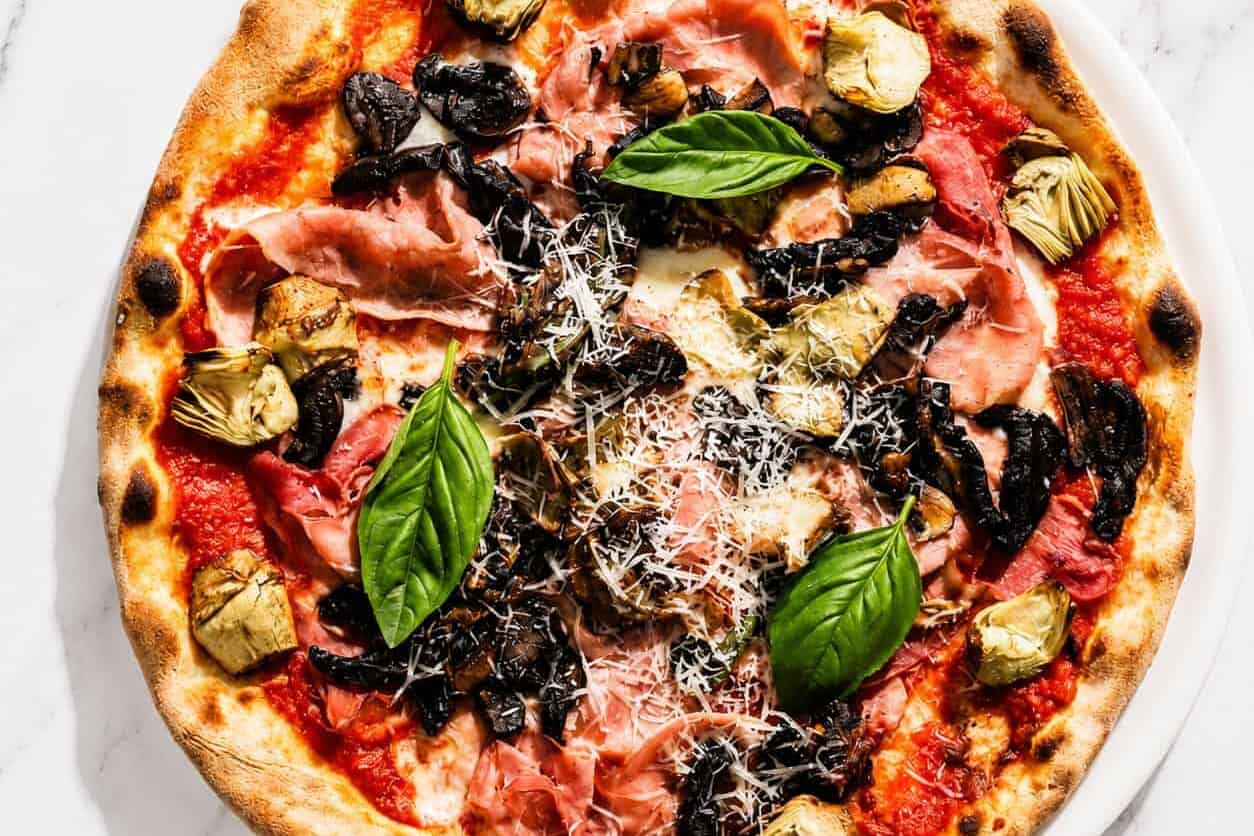
The pizzas that result are distinctly Roman in behaviour. The base holds. The slice has structure. The toppings — San Marzano, Pecorino Romano DOP, guanciale, Levoni Prosciutto San Daniele — taste like what they are, rather than blending into a single rich layer.
Dishes like the A’ Carbonara (white base, Pecorino Romano, guanciale, free-range egg yolk, black pepper) and the Amatriciana (San Marzano, guanciale, Pecorino Romano) reflect the four classic preparations of Roman cucina: Carbonara, Amatriciana, Cacio e Pepe, Gricia. These are the same flavour logic as Rome’s great pasta dishes, applied to pizza with the same restraint.
For a deeper understanding of the Roman pizza tradition — what it is, how it differs from Neapolitan, and the two main Roman styles — the full explainer on Roman pizza covers the territory in detail.
Crown Street itself reflects Sydney’s wider pizza range. A few doors along, Pizza Fritta 180 specialises in Neapolitan-style pizza fritta: fried rather than baked, eaten hot and fast rather than shared slowly across a table. It’s a different tradition again, and a useful contrast for understanding exactly what Roman pizza is doing differently.
How to Order Roman Pizza in Sydney
Ordering Roman pizza well means sharing multiple pizzas across the table — not one per person — letting the structured base and contrasting flavours do their best work.
Roman pizza rewards a different ordering mindset than most Sydney diners bring to a pizza restaurant. Because the base is structured and the slices travel well, it’s designed for variety — not one pizza each, but multiple pizzas shared across the table.
A well-ordered Roman table tends to follow this logic: start with something from the antipasti section to set the table, then bring two or three pizzas of contrasting character. One classic (Margherita Classica or Amatriciana), one richer option (Porchetta di Ariccia or A’ Carbonara), one lighter or vegetable-forward choice (Ortolana or Marinara). That contrast is where Roman pizza does its best work.
The structured base means you can move through several slices of different pizzas without the meal becoming heavy too quickly. This is the Roman logic: eating in variety, pacing well, finishing the table still wanting to talk rather than wanting to sleep.
It’s also worth ordering with the full menu in mind. The pasta at 170 Grammi — particularly the Rigatoni Amatriciana and Pappardelle alla Vaccinara — follows the same Roman ingredient logic as the pizzas, and works well as a course before the main pizza spread. The full ordering guide for 170 Grammi covers every dish and how to build a table worth staying at.
Why Roman Pizza Has Found Its Moment in Sydney
Roman pizza suits Sydney’s dining culture — sharing-focused, variety-driven, and increasingly curious about technique — better than almost any other style.
There’s a broader shift happening in how Sydney diners think about pizza. The conversation has moved from “where’s the closest decent pizza” to something more considered — questions about dough technique, fermentation, the quality of specific ingredients. Neapolitan pizza helped drive that shift, and Roman pizza is the natural next chapter for diners whose curiosity has kept going.
The lightness factor matters too. Roman pizza’s structured, non-dense base means you can eat more of it without the heaviness that ends the night too early. Sydney’s dining culture has always leaned toward sharing and variety — small plates, large tables, long evenings. Roman pizza fits that rhythm well. The technique behind this lightness — high hydration, long fermentation, olive oil in the dough — is covered in detail in why Roman pizza is crispier and lighter to eat.
There’s also an honesty to the style that resonates. Roman pizza doesn’t hide behind generous cheese or thick sauce. It puts the dough in the spotlight and then builds from there. For diners who want to taste what they’re eating rather than experience a production, that directness is part of the appeal.
Book a table at 170 Grammi and try Roman pizza in Surry Hills →
Frequently Asked Questions
What is Roman pizza and how is it different from Neapolitan pizza?
Roman pizza (La Tonda Romana) is characterised by a thin, crisp, structured base that holds its shape under toppings. Neapolitan pizza is softer, puffier, and foldable. Roman pizza is designed for sharing multiple slices across the table; Neapolitan is typically eaten individually while hot. The texture, technique, and eating rhythm are quite different.
Where can I find Roman pizza in Sydney?
170 Grammi Pizzeria at 428 Crown Street, Surry Hills NSW 2010 is Sydney’s dedicated Roman pizza restaurant. The menu is built around La Tonda Romana — a woodfired, round Roman-style pizza with a crisp, structured base and classic Roman toppings including Amatriciana, A’ Carbonara, and Margherita Classica.
What should I look for when ordering Roman pizza in Sydney?
Look for a base that is audibly crisp, slices that hold their shape without drooping, distinct topping flavour (not blended into a soft layer), and dough with genuine depth of flavour from proper fermentation. These are the signs of a kitchen doing Roman pizza properly, rather than simply labelling a pizza Roman on the menu.
What are the classic Roman pizza flavours to try?
The four classic Roman preparations — Amatriciana, Carbonara, Cacio e Pepe, and Gricia — all appear across the 170 Grammi menu as pizzas. The Margherita Classica is the best starting point for understanding the base itself. The A’ Carbonara and Amatriciana are the most distinctly Roman flavour experiences on the menu.
Is Roman pizza served by the slice in Sydney?
170 Grammi Pizzeria serves round Roman-style pizzas (La Tonda Romana) to the whole table, not by the slice. This is the sit-down Roman tradition, designed for sharing. Pizza al taglio — Roman pizza by the slice from rectangular trays — is a different format and is not the style served at 170 Grammi in Surry Hills.

170 Grammi is Surry Hills’ home of authentic Roman-style pizza, founded by Naples-born pizzaiolo Luigi Esposito. Where Luigi’s other restaurants bring the traditions of Naples to Sydney, 170 Grammi is dedicated to the Roman counterpart — La Tonda Romana — defined by thin, high-hydration dough, long fermentation and a clean, structured crunch that sets it apart from softer southern styles.
Opened in 2024 at 428 Crown Street and already one of the most-searched pizza restaurants in Surry Hills, 170 Grammi has quickly established itself as Sydney’s leading destination for Roman-style pizza. This blog covers the craft and culture behind what makes Roman pizza distinct — from dough technique and fermentation to menu guides, Roman food traditions and what to look for in a genuinely authentic slice.