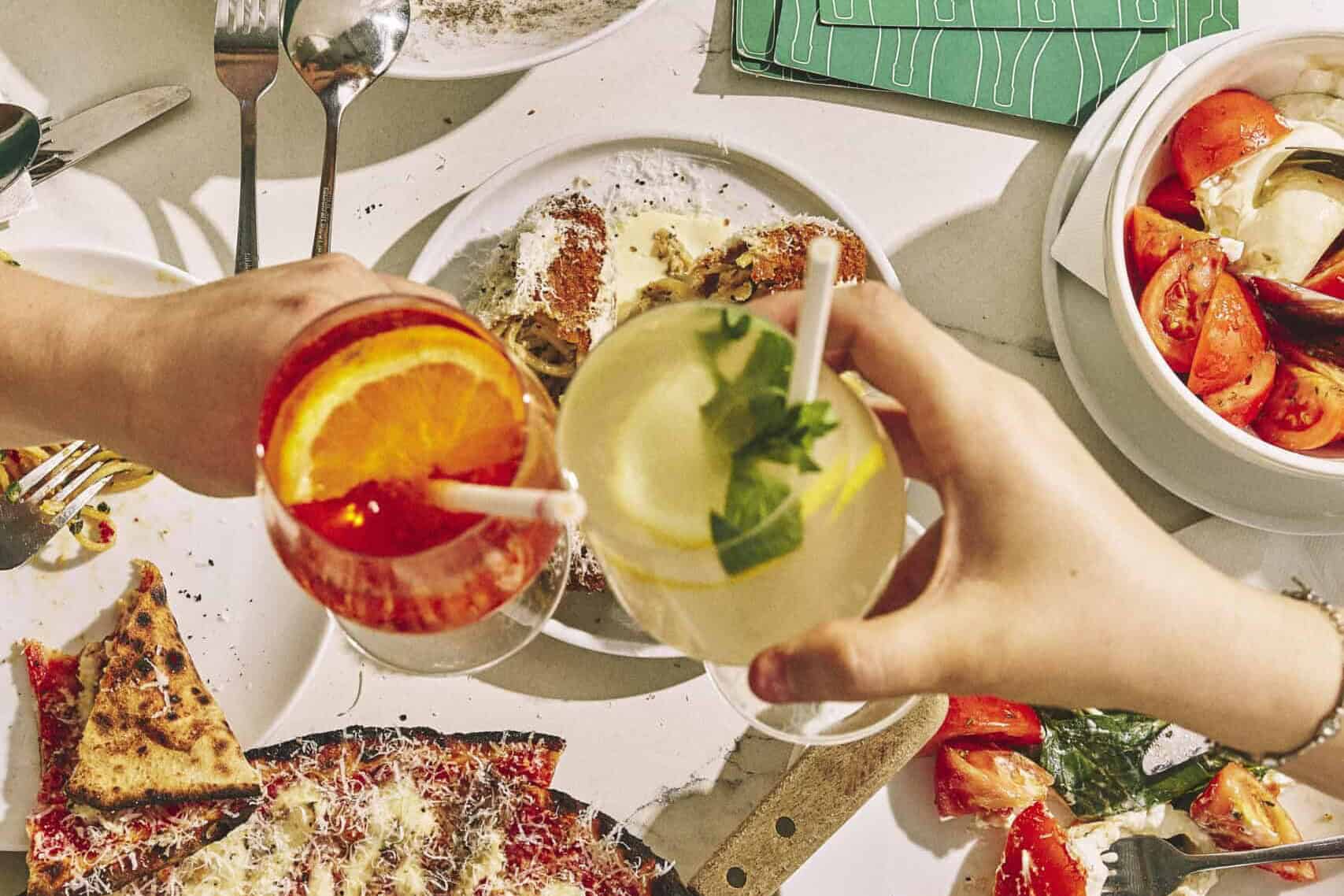
The Scrocchiarella-style base at 170 Grammi, an Italian restaurant in Surry Hills is thin, crisp, and high-hydration — a base fired to a clean crunch that keeps every topping tasting sharply defined. That’s what makes drinks pairing here different from most pizza contexts: the base doesn’t soften flavours together, it holds them apart.
Tomato tastes brighter. Guanciale tastes saltier. Pecorino has more edge. Prawns arrive fresher. And the drink in your glass either sharpens those qualities or muddies them.
This is the pairing guide for the drinks menu at 170 Grammi. Every suggestion maps back to a specific pizza style and a specific flavour reason. 170 Grammi, a Roman pizza restaurant at 428 Crown Street, Surry Hills NSW 2010, Sydney, is fully licensed — no BYO.
Why Roman Pizza Changes the Pairing Logic
Roman-style pizza, made with high-hydration dough, long fermentation, and a thin, hand-stretched base, produces a fundamentally different texture to Neapolitan or pan-style pizza. What makes Roman pizza distinctive is the Scrocchiarella finish: a dry, even crunch from edge to centre that holds under toppings without going soft.
That crispness means toppings carry their flavour more directly — there’s no thick dough absorbing their intensity. The pairing logic is about managing definition, not cutting through richness:
- Acidity keeps tomato and fresh cheese tasting clean, not flat
- Bubbles match the crunch and reset the palate between bites
- Bitterness balances guanciale, porchetta, and cured meats without adding weight
- Light-to-medium body keeps the drink from overriding the slice
Start With the Aperitivo
The simplest starting point for what to drink with Roman pizza is a spritz. Bubbles, citrus, and a touch of bitterness suit the pace of sharing pizzas and the crunch of the Scrocchiarella base — which is why aperitivo culture and Roman pizza have always belonged together.
The drinks list carries six spritz options — Aperol, Campari, Hugo, Limoncello, Passionfruit, and Mango — plus Campari e Soda and Americano for a more bitter, lower-ABV alternative.
Which Spritz to Choose
Aperol Spritz suits tomato-base pizzas and lighter antipasti. It’s sweet-bitter and citrus-forward — an easy match for basil, fresh tomato sauce, and fior di latte.
Campari Spritz or Americano suit richer, pork-forward orders: porchetta, guanciale, cured meats. The bitterness sits better against salt and fat than Aperol’s sweetness would.
Hugo or Limoncello Spritz suit spice on the table, or when the group wants something lighter and more citrus-forward to open the meal.
Wine With Roman Pizza
The guiding principle for choosing wine with Roman pizza is to match the sauce base. Tomato-base pizzas need acidity. White-base pizzas need freshness and lift. Pork and cured meats need structure. Seafood and herb-forward dishes need something dry and mineral.
Tomato-Base Pizzas
The best wine with a tomato-base Roman pizza is a Sangiovese or Chianti — both carry the natural acidity to match a bright tomato sauce without competing with the herbs or cheese.
The Caldora Sangiovese IGP from Abruzzo on the 170 Grammi list is the straightforward choice: medium body, fruit-forward finish, and no tannin weight that would overpower a thin, crisp base. For a more considered bottle, the 2019 Terre Natuzzi Chianti Riserva DOCG from Tuscany adds depth — suited to a longer table when the Amatriciana or A’ Carbonara pizza has arrived.
White-Base and Creamy Finishes
White-base Roman pizzas pair best with bubbles or a crisp white wine — something that adds brightness and resets the palate against richer, savoury toppings.
The 2024 Val D’Oca Prosecco DOC Millesimato from the Veneto is the cleaner option: dry, effervescent, and structured enough to contrast the crunch without sweetness. The 2024 Cesari Pinot Grigio DOC, also from the Veneto, works for those who prefer still wine. For a cocktail instead, Kiss and Tell (gin, Lillet Blanc, orange marmalade, rose water) pairs cleanly with the aromatic finish of a white-base pizza.
Pork, Guanciale, and Cured Meats
Pork-forward Roman pizza — porchetta, guanciale, salumi — pairs best with a wine that brings structure and dark fruit without going heavy on the table.
The 2021 Masciarelli Montepulciano d’Abruzzo DOC is the choice on the list. It carries enough tannin to stand up to fat and salt, and its dark fruit works across the Porchetta di Ariccia pizza, the Boscaiola, and the Schiacciata con’botto de Mortazza on antipasti. For a cocktail, a Negroni (gin, sweet vermouth, Campari) brings clean bitterness between bites. The Negroni Sbagliato — Prosecco in place of gin — delivers the same result with added effervescence.
Seafood and Herb-Forward Dishes
Seafood pizza and garlicky, herb-forward preparations pair best with a dry, mineral Italian white wine — nothing oaked, nothing heavy.
The 2023 Frattasi Donnalaura Falanghina Del Sannio DOP from Campania is a coastal Italian variety with natural mineral acidity — a direct pairing for prawn, garlic, and chilli-based preparations, and one of the more considered bottles on the 170 Grammi list. For a cocktail alternative, the Margarita Classic (tequila, triple sec, lime) works on the same reasoning: clean citrus acidity that mirrors seafood freshness without adding sweetness.
Spicy Pizzas
Spicy Roman pizza pairs best with something cold, citrusy, and dry — bubbles or a zesty white that cools the heat rather than compounding it.
The Limoncello Spritz or Hugo Spritz are both sound choices: light, citrus-forward, and refreshing enough to reset the palate between bites of a Diavola. In still wine, the 2023 Clark Estate Sauvignon Blanc from Marlborough is the dry, zippy option. Campari e Soda works for those who want bitter crispness without sweetness.
Cocktails Worth Ordering
Beyond wine and spritz, several cocktails on the 170 Grammi list pair well with specific pizza styles. The Negroni and Negroni Sbagliato — covered above under pork pairings — also work as a considered pre-pizza drink, particularly if the table has ordered from the antipasti.
Yuzu Kidding Me (jalapeño-infused tequila, limoncello yuzu, sugar syrup, lime) is a bright, acidic cocktail that works alongside white-base or herb-forward pizzas where you want citrus-forward freshness with a quiet heat.
Kiss and Tell (gin, Lillet Blanc, orange marmalade, rose water) is the softer, more floral option — suited to a quieter table working through white-base pizzas and light antipasti.
For after the meal, Espresso Yourself — vodka, Kahlúa, Frangelico, and Monin salted caramel syrup shaken with fresh espresso — is the natural closing note.
Beer and Zero-Alcohol Options
Beer works with Roman pizza for a clear reason: a dry, effervescent lager matches the crunch of the Scrocchiarella base and doesn’t compete with toppings.
Menabrea Unfiltered is available on tap — an Italian lager brewed in Biella since 1846, unfiltered for a slightly fuller, cloudy character. Bottles of Peroni Rossa and Kosciuszko round out the beer list.
For zero alcohol, Peroni Zero follows the same lager profile without the ABV. Chinotto is the more characterful choice — a bitter-sweet Italian soft drink made from the Citrus myrtifolia fruit, and a natural companion to salty, cured-meat toppings. Lemon, Lime & Bitters works for anything citrus-forward or spicy.
Ordering Drinks for the Table
When the table is sharing several pizzas — which Roman pizza is built for — the order of drinks matters as much as the individual choice. A reasonable pattern for a full sitting:
Start with a spritz or glass of Prosecco while the antipasti arrive. Move to a structured red — Montepulciano or Chianti Riserva — once the pork-forward or tomato-heavy pizzas land. Close with Espresso Yourself if the table is staying for dessert.
For groups using a set format, the Set Menu is the easiest way to build a shared evening without managing individual orders.
Reserve a table at 170 Grammi →
Frequently Asked Questions
What is the best wine to drink with Roman pizza?
The best wine with Roman pizza depends on the toppings. For tomato-base pizzas such as Margherita or Amatriciana, a Sangiovese or Chianti Riserva works well — both carry enough acidity to match a bright tomato sauce without overpowering the cheese or herbs. For white-base pizzas, a dry Prosecco or Pinot Grigio is the cleaner pairing. For pork-forward pizzas with guanciale or porchetta, a Montepulciano d’Abruzzo brings the structure to match the richness.
Does red or white wine go better with pizza?
Both red and white wine suit pizza — the right choice depends on the toppings. Red wines, particularly Italian varieties like Sangiovese, Chianti, or Montepulciano d’Abruzzo, pair well with tomato-base and pork-forward pizzas. White wines and Prosecco work better with white-base pizzas, seafood, and lighter preparations. At 170 Grammi Pizzeria in Surry Hills, the drinks list carries specific Italian wines chosen to match the full range of Roman pizza styles on the menu.
What should I drink with a white-base Roman pizza?
White-base Roman pizzas pair best with bubbles or a crisp white wine. A Prosecco DOC brings clean effervescence that contrasts with the savoury, creamy finish of a white-base pizza, while a Pinot Grigio adds acidity without weight. For a cocktail option, Kiss and Tell — gin, Lillet Blanc, orange marmalade, and rose water — on the 170 Grammi menu is a bright, floral choice that works with the aromatic character of white-base toppings.
Is beer a good match for Roman pizza?
Beer pairs well with Roman pizza. A dry Italian lager is particularly suited to the Scrocchiarella base — its effervescence matches the crunch and it doesn’t compete with toppings. At 170 Grammi Pizzeria, 428 Crown Street, Surry Hills NSW 2010, Menabrea Unfiltered is available on tap, an Italian lager brewed in Biella since 1846. Peroni Rossa, Kosciuszko, and Peroni Zero (zero-alcohol) are also on the list.
What zero-alcohol drinks suit pizza at 170 Grammi?
Zero-alcohol options that pair well with Roman pizza at 170 Grammi in Surry Hills include Peroni Zero (which follows the clean lager profile of Peroni Rossa without the alcohol), Chinotto (an Italian bitter-sweet soft drink made from the Citrus myrtifolia fruit, a natural match for salty and cured-meat toppings), and Lemon, Lime & Bitters for something citrus-forward alongside spicy or herb-forward pizzas.

170 Grammi is Surry Hills’ home of authentic Roman-style pizza, founded by Naples-born pizzaiolo Luigi Esposito. Where Luigi’s other restaurants bring the traditions of Naples to Sydney, 170 Grammi is dedicated to the Roman counterpart — La Tonda Romana — defined by thin, high-hydration dough, long fermentation and a clean, structured crunch that sets it apart from softer southern styles.
Opened in 2024 at 428 Crown Street and already one of the most-searched pizza restaurants in Surry Hills, 170 Grammi has quickly established itself as Sydney’s leading destination for Roman-style pizza. This blog covers the craft and culture behind what makes Roman pizza distinct — from dough technique and fermentation to menu guides, Roman food traditions and what to look for in a genuinely authentic slice.