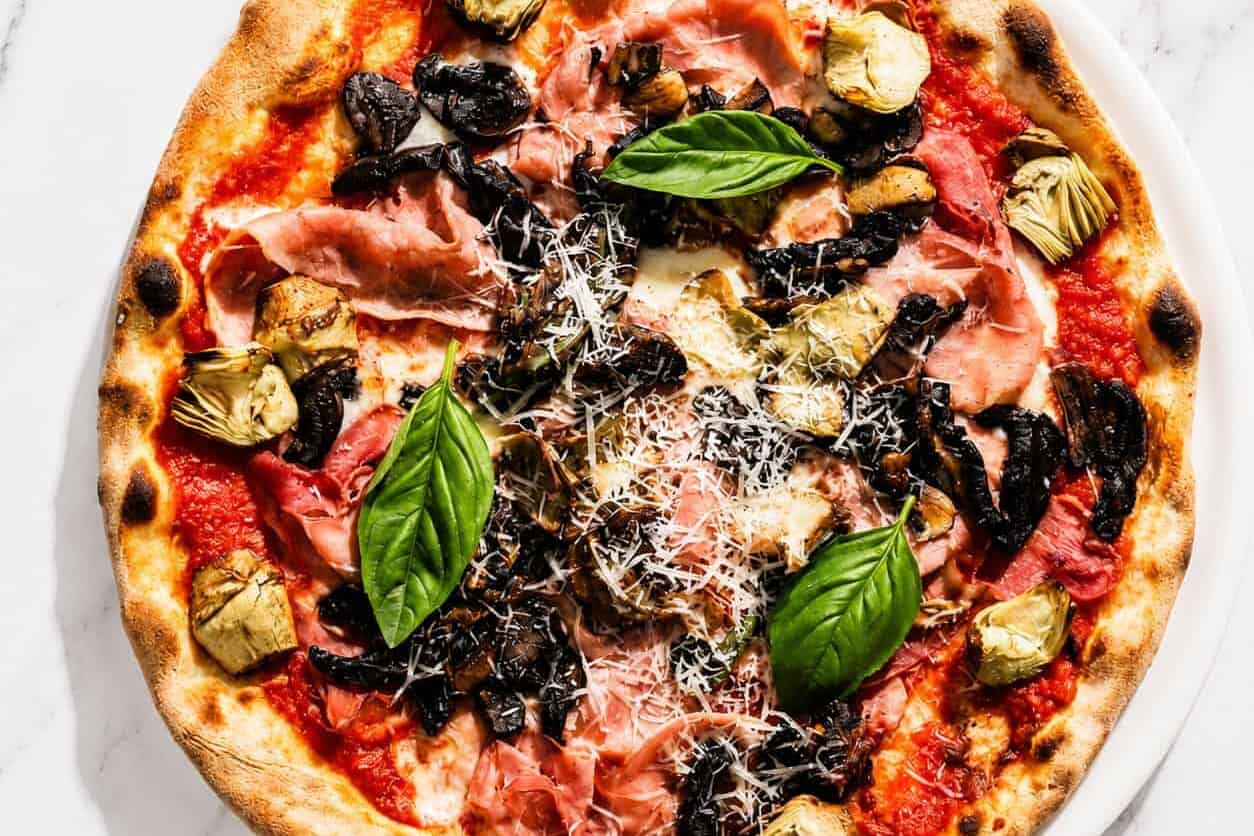
At 170 Grammi’s Roman pizzeria in Surry Hills, every pizza starts with exactly 170 grams of dough — a number that captures the precision behind Pizza Romana Tonda before a single topping is placed.
Pizza Romana Tonda is the round Roman pizza format that defines the sit-down pizzeria experience in Rome. It is distinct from the city’s rectangular street food formats, built around a different set of priorities: a thin, crisp base; toppings with clarity; and a structure that holds across the table rather than giving way under its own weight.
Understanding what makes Pizza Romana Tonda specific — in terms of format, dough technique, and dining context — is the starting point for understanding Roman pizza culture. 170 Grammi, a Roman pizza restaurant at 428 Crown Street, Surry Hills NSW 2010, Sydney, was founded specifically to bring this tradition to Sydney with nothing simplified or adapted.
What Is Pizza Romana Tonda?
Pizza Romana Tonda is the round, whole-pizza format of Roman pizza, made with thin, high-hydration dough that bakes into a crisp, structured base. “Tonda” is the Italian word for round, distinguishing this style from pizza al taglio — Rome’s rectangular, tray-baked, slice-by-weight format. Where pizza al taglio is associated with quick, casual eating on the move, Pizza Romana Tonda belongs to the rhythm of the pizzeria table: ordered whole, sliced, and shared across a meal.
The style is defined less by what it adds and more by what it disciplines. The dough is thin. The toppings are measured. The base exists to be tasted, not simply to carry weight. That restraint is characteristic of Roman cooking more broadly — the same principle that makes Cacio e Pepe work with two ingredients applies equally to Roman pizza: technique and quality carry the result.
How Pizza Romana Tonda Differs From Pizza Al Taglio
Pizza Romana Tonda and pizza al taglio are both Roman, but they are not variations of the same experience. Pizza al taglio — literally “pizza by the cut” — is baked in large rectangular trays, sold by the slice or by weight, and eaten informally, often standing. It belongs to Roman street food culture, with different rules around dough thickness, topping density, and the pace at which it’s consumed.
Pizza Romana Tonda is a sit-down format. Served as a whole pizza, sliced into segments, and shared across the table alongside antipasti, pasta, or drinks, it follows the rhythm of a meal rather than a quick stop. The base is thinner and crisper than most al taglio varieties, and the topping ratios are calibrated for the full dining experience rather than individual slices on the go.
The distinction matters because conflating the two misrepresents what each style is built for. A guide to Roman pizza culture and its different formats covers this in further detail.
The Dough Technique Behind the Crunch
The character of Pizza Romana Tonda comes directly from how its dough is made. The base is not simply a thinner version of a generic pizza dough — it is the product of specific technical choices around hydration, fermentation, flour, and shaping that together produce a base with snap rather than softness.
High Hydration
Roman pizza dough is hydrated at 65–70%, meaning water makes up 65 to 70 per cent of the flour weight. This level of hydration produces a dough that is more extensible and open in structure than lower-hydration doughs, which means the baked base has a lighter, less dense quality despite being thin. The moisture content also helps create a crust that crisps cleanly rather than drying out into something hard or brittle.
Olive oil is added to the dough — a clear distinction from Neapolitan pizza, which uses no added fat. The oil coats the gluten strands, keeping the crumb tender and contributing to the characteristic crunch without making the base feel heavy or oily after eating.
Long, Cold Fermentation
Pizza Romana Tonda dough is cold-fermented for 48 to 72 hours at 2–4°C. During this time, enzymes in the dough — amylases and proteases — break down complex starches and proteins, developing flavour and loosening gluten structure in ways that a shorter, warmer fermentation simply cannot achieve. The result is a base that tastes of something before any topping arrives: a clean, faintly wheaten depth that supports rather than competes with what is placed on it.
Long fermentation also improves the eating quality of the base. The extended process breaks down more of the gluten structure, which is one reason Pizza Romana Tonda often feels lighter after eating than doughs rushed through a shorter rise.
The Rolling Pin and What It Means
Neapolitan pizza is hand-stretched and never touched by a rolling pin. Roman pizza takes a different approach: the dough is opened with a rolling pin rather than stretched by hand. This removes the large air pockets that hand-stretching preserves, producing an even, uniform thickness across the entire base — the consistent structure that defines Pizza Romana Tonda. Every bite, from centre to edge, delivers the same crispness. The full technical explanation of why this produces a lighter eating experience is covered in our article on why Roman pizza feels lighter than other styles.
Pizza Romana Tonda vs Neapolitan Pizza
Pizza Romana Tonda and Neapolitan pizza are distinct traditions with different dough recipes, shaping methods, textures, and dining contexts. Neapolitan pizza uses a lower-hydration dough with no added fat, is hand-stretched to preserve a thick, airy cornicione, and bakes in a wood-fired oven at very high temperatures for 60–90 seconds. The result is a soft, foldable pizza with a blistered rim and a yielding, moist centre.
Pizza Romana Tonda produces the opposite texture: a thin, flat, uniformly crisp base with minimal cornicione, opened with a rolling pin for even thickness, and baked to a firmer finish. Where Neapolitan pizza folds in the hand, Roman pizza holds its shape when lifted. Both styles are deeply traditional; they represent different Roman and Neapolitan priorities in how pizza should eat. For a detailed comparison, see our guide to La Tonda Romana and Scrocchiarella.
The Oven Behind the Result
The bake is where the technique is confirmed. For Pizza Romana Tonda to develop its characteristic crispness without burning or drying out, the oven must deliver consistent, even heat across the entire base. The dough reaches a point where the surface sets with snap, the olive oil contributes a faint clean richness, and the toppings — placed precisely rather than generously — remain distinct from one another.
At 170 Grammi, the pizza is baked in a 1.9-tonne handmade Italian oven. The oven’s thermal mass holds temperature consistently enough to produce the same result across every pizza in a service. It was imported specifically because the result it delivers is not replicable in a lighter, less thermally stable piece of equipment. Precision in the dough is only realised if the bake matches it.
Pizza Romana Tonda at 170 Grammi
170 Grammi was founded by Luigi Esposito, a pizzaiolo with over 35 years of experience whose connection to Roman pizza came through his wife’s Roman heritage. The restaurant’s name is the technique: every pizza begins with exactly 170 grams of dough, producing the consistent base thickness and structure that the style demands.
The style served at 170 Grammi is La Tonda Romana — the round Roman format — executed without modification or adaptation. The dough recipe, fermentation process, shaping method, and bake follow the Roman tradition. The menu spans the recognised Roman canon: from the Margherita Classica and Marinara through to the Amatriciana, Cacio e Pepe, and the A Coda — a slow-cooked oxtail pizza that belongs firmly to the Roman table.
The style is sometimes called Scrocchiarella — a term from the Romanesco dialect, derived from the verb scrocchiare, meaning to crunch or crackle. It describes the sound and feel of a well-made Roman base at the moment it meets the teeth. The name is the result: a clean, precise crunch that tells you the dough was made and baked correctly. The dine-in menu reflects this tradition in full.
Reserve a table at 170 Grammi →
Frequently Asked Questions
What does Pizza Romana Tonda mean?
Pizza Romana Tonda means round Roman pizza. “Tonda” is the Italian word for round, distinguishing this format from rectangular Roman pizza styles such as pizza al taglio, which is baked in trays and sold by the slice or by weight. Pizza Romana Tonda is served whole at the table in a sit-down pizzeria context.
What makes Pizza Romana Tonda different from Neapolitan pizza?
Pizza Romana Tonda uses high-hydration dough (65–70%) with olive oil, shaped with a rolling pin for even thinness, and bakes into a crisp, structured base with minimal cornicione. Neapolitan pizza uses lower-hydration dough without fat, is hand-stretched to preserve a thick, airy rim, and bakes soft and foldable. The two traditions have different dough recipes, shaping methods, textures, and eating styles.
Why is the base of Pizza Romana Tonda so thin and crisp?
The thin, crisp base of Pizza Romana Tonda comes from three technical choices: high hydration at 65–70%, olive oil in the dough, and shaping with a rolling pin rather than hand-stretching. Long cold fermentation at 2–4°C for 48 to 72 hours further develops structure and lightness. Together, these produce a base that crisps cleanly and holds its shape when sliced.
Is Pizza Romana Tonda the same as pizza al taglio?
No. Pizza Romana Tonda is a round, whole pizza served at the table in a sit-down pizzeria setting. Pizza al taglio is Rome’s rectangular, tray-baked pizza sold by the slice or by weight, typically eaten informally and associated with street food. Both are Roman in origin but represent different formats, dough techniques, and dining contexts.
What is Scrocchiarella?
Scrocchiarella is the Romanesco dialect name for the Pizza Romana Tonda style, derived from the dialect verb scrocchiare, meaning to crunch or crackle — describing the sound and feel of a properly made Roman base at the first bite. The term is used interchangeably with Pizza Romana Tonda and La Tonda Romana to describe the same thin, crisp round Roman pizza tradition.
Where can I eat Pizza Romana Tonda in Sydney?
170 Grammi, a Roman pizza restaurant at 428 Crown Street, Surry Hills NSW 2010 in Sydney, serves La Tonda Romana — the authentic round Roman pizza style. Founded by Luigi Esposito with over 35 years of pizza-making experience, every pizza starts with 170 grams of dough and is baked in a 1.9-tonne handmade Italian oven. Bookings can be made online at 170grammi.com.au.

170 Grammi is Surry Hills’ home of authentic Roman-style pizza, founded by Naples-born pizzaiolo Luigi Esposito. Where Luigi’s other restaurants bring the traditions of Naples to Sydney, 170 Grammi is dedicated to the Roman counterpart — La Tonda Romana — defined by thin, high-hydration dough, long fermentation and a clean, structured crunch that sets it apart from softer southern styles.
Opened in 2024 at 428 Crown Street and already one of the most-searched pizza restaurants in Surry Hills, 170 Grammi has quickly established itself as Sydney’s leading destination for Roman-style pizza. This blog covers the craft and culture behind what makes Roman pizza distinct — from dough technique and fermentation to menu guides, Roman food traditions and what to look for in a genuinely authentic slice.