
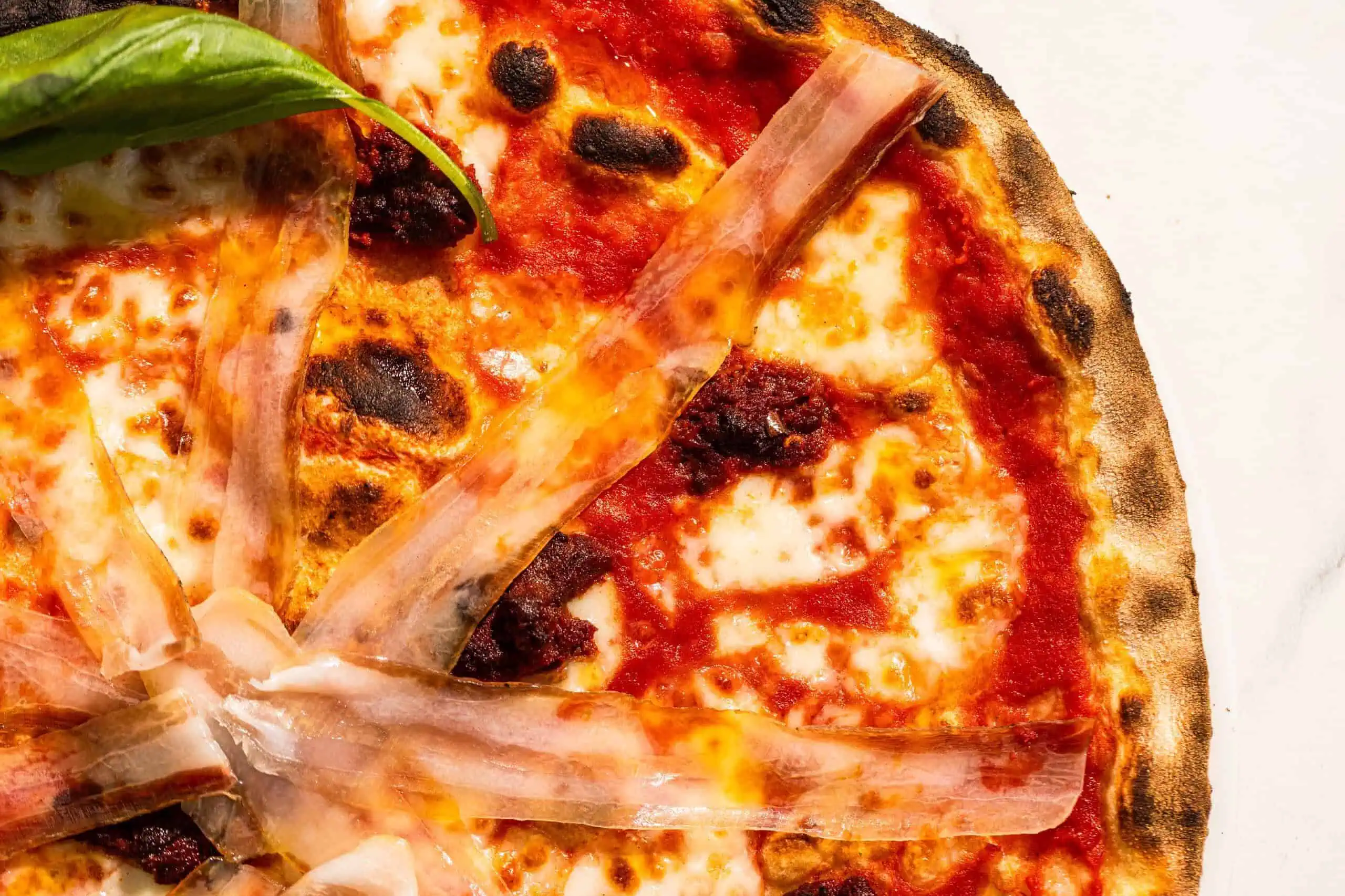
Not all pizza is meant to feel the same after you eat it.
Some styles are soft and filling. Others are rich and indulgent. Roman pizza is designed to be light, crisp and balanced — delivering flavour without heaviness, and texture without that “I need to lie down now” feeling.
At 170 Grammi in Surry Hills, this isn’t marketing language. It’s a technique-first approach to dough and baking that changes how pizza sits on the table, how it holds up slice after slice, and how it feels at the end of the meal.
If you’ve ever wondered why Roman pizza can feel crispier and lighter than softer styles, here’s the real reason: it’s built that way from the start.
👉 Book a table and experience Roman pizza in Surry Hills
What people mean when they say “Roman pizza feels lighter”
“Lighter” can mean a few things, and it’s worth being clear.
When diners describe Roman pizza as lighter, they’re usually talking about texture and structure, not diet claims. Roman pizza tends to feel lighter because it’s:
- Less dense through the base
- Crisper on the outside, rather than soft throughout
- More structured, so slices don’t feel heavy or soggy
- Designed for variety, so you can share multiple pizzas without it becoming overwhelming
In other words: it’s pizza that’s engineered for balance.
The three key reasons Roman pizza feels lighter
Roman pizza doesn’t rely on a single trick. It’s the combination of dough choices and baking control that creates the result. At 170 Grammi, three technical foundations do most of the heavy lifting.
1) High-hydration dough creates a more open crumb
Hydration is simply how much water is in the dough relative to flour. Roman dough typically uses higher hydration than softer pizza styles, and that extra water changes the internal structure.
With the right method, higher hydration supports:
- larger air pockets
- a more open crumb
- a base that feels substantial, without being dense
That’s one of the main reasons Roman pizza can feel lighter. Instead of a compact, bready bite, you get a structure that’s crisp outside and airy inside.
👉 Read why high-hydration dough is key to Roman pizza
2) Long fermentation develops structure and balance over time
Roman pizza doesn’t rush. Long fermentation gives the dough time to develop flavour and strength gradually, which affects both taste and texture.
When fermentation is controlled and extended, the dough can become:
- more flavourful at the base level
- more balanced in structure
- better able to bake crisp without turning heavy
This matters because Roman pizza is meant to stay crisp and structured across the meal. A rushed dough can bake “fast”, but it often eats flatter and heavier. Time helps Roman dough become more refined.
👉 Discover the role of long fermentation in Roman pizza
3) Crisp, controlled baking locks in the Roman “snap”
Roman pizza is famous for a clean, crisp bite — not floppy, not soft, not doughy. That crispness is part of what makes it feel lighter, because the texture stays defined rather than turning into one soft mass as you eat.
With controlled baking, the pizza develops:
- a crisp exterior that holds its shape
- an interior that stays airy
- a dry, clean finish that supports toppings instead of absorbing them
That’s the Roman goal: texture with structure.
Why crispness changes how “heavy” pizza feels
Soft pizza styles can be incredibly delicious, but they often feel heavier because the texture stays soft all the way through. When the base is soft, it can read as denser in the mouth, even if the dough is well made.
Roman pizza flips that experience. Crispness creates separation between bite and weight: you get a clean snap, clear flavour, and a base that doesn’t feel like it’s sitting in your stomach as a single dense block.
This is also why Roman pizza is so satisfying for sharing. The structure holds, the slices stay neat, and the table can order variety without the meal turning heavy too quickly.
👉 Planning a catch-up? Use our Roman pizza group dining guide
Why Roman pizza often tastes “cleaner” (and that makes it feel lighter too)
Another reason Roman pizza feels lighter is that it tends to taste more defined.
A crisp, structured base keeps toppings clearer. Tomato tastes brighter. Cured meats taste sharper. Cheese finishes taste more distinct. Instead of everything blending into one rich, soft layer, Roman pizza preserves contrast.
That clarity changes the whole eating experience. It keeps your palate engaged, which makes the meal feel less heavy and more moreish — the kind of pizza where you try a slice, then want to try another flavour.
👉 Not sure where to start? Follow our “what to order” guide
About “easier to digest”: what to know (without overclaiming)
You’ll often hear people say Roman pizza is “easier to digest”. What we can responsibly say is this: many diners describe Roman pizza as feeling lighter and easier to eat, especially across multiple slices.
That perception lines up with the technical foundations:
- an open crumb from higher hydration
- structure developed through longer fermentation
- a crisp finish that avoids a soft, dense bite
Everyone’s body is different, and pizza is pizza. But in terms of texture and structure, Roman technique is designed to avoid heaviness and keep the experience balanced.
La Tonda Romana and Scrocchiarella: two Roman textures, one goal
Roman pizza isn’t just one style. Two classic Roman references are La Tonda Romana and Scrocchiarella, both known for crispness — but with different expressions of texture.
At 170 Grammi, the approach is Roman in principle: round pizzas, crisp structure, and dough technique that prioritises balance and clarity.
If you want to go deeper on how these styles differ (and why texture changes the whole experience), it’s worth a read.
👉 Learn the difference between La Tonda Romana and Scrocchiarella
How to order if you want the “lighter” Roman experience
If your goal is to feel the Roman difference, ordering strategy matters. Roman pizza rewards variety and contrast, not “one heavy pizza each”.
Order for contrast, not repetition
A simple structure that works beautifully is:
- one classic choice
- one lighter or veg-forward option
- one richer Roman favourite
This keeps the table balanced. Every second slice resets your palate, which makes the whole meal feel lighter and more enjoyable.
Share your pizzas
Roman pizza slices hold their shape and stay structured, which makes sharing easy. When you share, you naturally eat in smaller, varied bites — and that’s exactly how Roman pizza is meant to be enjoyed.
The takeaway: Roman pizza is designed to deliver flavour without heaviness
Roman pizza feels lighter because it’s built around a specific outcome: crisp outside, airy inside, structured all the way through.
Higher hydration helps create an open crumb. Long fermentation develops balance over time. Controlled baking locks in crispness and keeps toppings clear. The result is pizza that tastes bold, eats cleanly, and stays enjoyable from first slice to last.
If you want to experience why Roman pizza has this reputation, the best way is simple: come in, order with variety, share a few pizzas across the table, and pay attention to the base. The technique is doing more than you think.
👉 Book a table and try Roman pizza the lighter way
👉 Prefer pizza at home? Order online
👉 Visit us in Surry Hills
Frequently Asked Questions
Roman pizza often feels lighter because it’s crisp and structured, with an open crumb that’s less dense than softer, bready bases.
Yes. Roman pizza dough is typically designed for a thinner, crisper base with more structure, while Neapolitan pizza is softer with a puffier crust.
High-hydration dough can create a more open crumb with larger air pockets, which helps the base feel less dense.
Long fermentation helps the dough develop flavour and structure over time, supporting a crisp bake and a more balanced texture.
Many diners describe Roman pizza as easier to eat because it feels less dense and stays crisp, though individual experience varies.
Order with variety and share: include a classic pizza, a lighter option, and a richer Roman favourite so the table stays balanced.