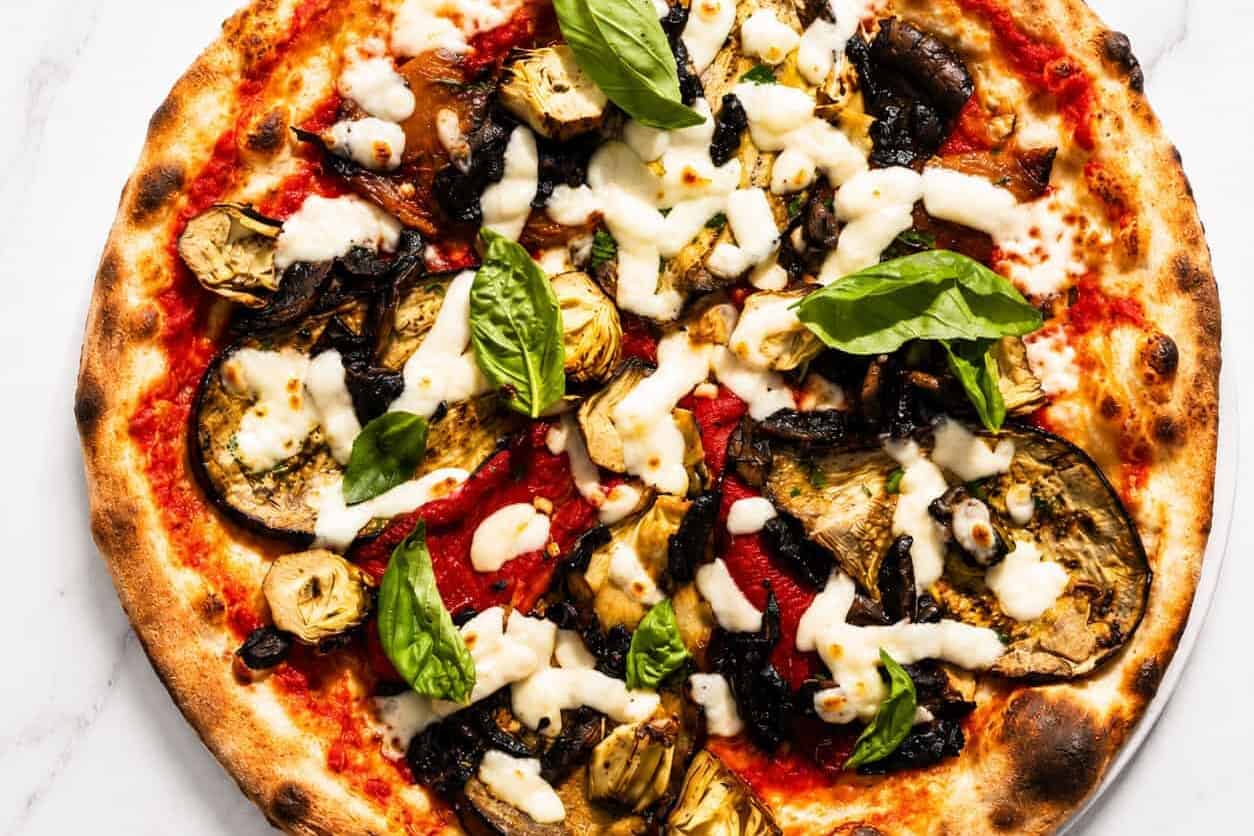
170 Grammi Pizzeria in Surry Hills is built around a specific culinary tradition: Roman pizza. Not a loose interpretation of it — the thin-based, crunch-forward style that Rome has been producing for decades, made the way it is actually supposed to be made.
Roman pizza isn’t one single thing. It’s a family of traditions defined by a different set of priorities to the Neapolitan style most people recognise: thin base, clean snap, a slice that holds its shape, toppings that stay distinct rather than merging into a soft mass. Two names — La Tonda Romana and Scrocchiarella — describe the round, table-served expressions of that tradition. Both are worth understanding. Neither is pizza al taglio.
Here is what Roman pizza actually is, how it differs from Neapolitan pizza, and what makes the texture work the way it does.
Book a table and taste Roman pizza in Surry Hills →
What Is Roman Pizza?
Roman pizza (pizza romana) is a style originating in Rome, defined by a thin base, high-hydration dough, and a crisp, structured bite that holds its shape under toppings. The base is dry rather than wet — a slice can be picked up, passed around the table, and eaten without collapsing. Toppings stay distinct and sharp rather than merging into a single soft mouthful. The base itself has flavour: clean, slightly open in the crumb, with a definite snap at the edge.
That crispness is not a byproduct of baking longer or at higher heat. It is a deliberate outcome of dough decisions made long before the pizza goes into the oven: the hydration ratio, the fermentation time, the technique behind the stretch. When it is done correctly, Roman pizza is lighter than other styles — satisfying in a way that is about texture and clarity rather than density. You can eat more of it without feeling weighed down, which is part of the point.
La Tonda Romana and Scrocchiarella: The Two Names Worth Knowing
Roman pizza’s two main round expressions share the same commitment to crispness but deliver meaningfully different textures. Understanding the distinction matters — not least because they are often conflated, and the difference is real.
La Tonda Romana
La Tonda Romana is the classic round Roman pizza — very thin, with a base that has an almost cracker-like quality when baked correctly. “Tonda” means round in Italian. This is the format found in Rome’s sit-down pizzerias: served whole at the table, sliced and shared. The dough is high-hydration and long-fermented, and the base has very little rise. There is very little dough to hide behind. When the fermentation and bake are right, the result is a clean, satisfying crunch and toppings that taste the way they are supposed to — bright, sharp, individual.
Scrocchiarella
Scrocchiarella is a Roman pizza style defined by an even more pronounced crunch, and a lighter, more aerated interior crumb. The word itself is onomatopoeic — taken from the Romanesco dialect, it describes the sound of biting through the base. Where La Tonda Romana is thin with a cracker-like snap, Scrocchiarella tends to have a more open internal structure: lighter in feel, paired with that characteristically crackly exterior. Same Roman discipline around crispness, different internal texture and bite.
Both styles sit under the Roman umbrella. The distinction is in the bite: clean and thin for Tonda, more aerated and crackly for Scrocchiarella.
Compare La Tonda Romana and Scrocchiarella in detail →
Is Roman Pizza Always Rectangular Like Pizza al Taglio?
No — and this is the most persistent misconception worth clearing up. Pizza al taglio (pizza “by the cut”) is a Roman format: baked in long rectangular trays, sold by weight or by slice, eaten casually and often standing up. It is an important part of Roman food culture. But it is not the whole picture.
Roman pizza also includes the round styles — La Tonda Romana and Scrocchiarella — which are served whole at a table, sliced and shared as part of a proper meal. Most sit-down restaurants in Rome serve the round format. Both traditions are genuinely Roman; they are built for different eating occasions rather than different techniques. In Italy, the contrast is sometimes captured in two other terms: pizza bassa (“short pizza”) for the low, thin Roman style, and pizza alta (“tall pizza”) for the higher-rising Neapolitan crust — though usage of both terms varies by region. If you have only ever associated Roman pizza with rectangular slices, the round tradition is the one worth exploring.
Roman Pizza vs Neapolitan Pizza: What Actually Differs
Roman and Neapolitan pizza are both Italian, both rooted in real tradition, and genuinely distinct from each other. The comparison is not about which is better — it is about understanding what each style is designed to do.
Neapolitan pizza comes from Naples. The base is soft and pliable — designed to be folded and eaten on the go. The cornicione (crust edge) is puffy and airy. The centre is wetter and more delicate. Neapolitan pizza is built to be eaten quickly while it is hot, before the base softens — and that softness, when the pizza is made correctly, is the whole point. It is designed for a single eater, eating fast.
Roman pizza takes the opposite approach. The base is thin and dry, with a crispness that holds up under toppings and over time. Slices stay structured. A pizza can be shared around a table without collapsing. Flavours stay sharper because there is less dough to soften and absorb them. It is built for a longer meal — for variety, for sharing, for tasting across multiple pizzas in a sitting. One recipe-level difference behind that crispness: Roman dough typically works a measure of olive oil into the dough itself, rather than adding it only after baking — a detail Neapolitan dough (usually just flour, water, salt and yeast) doesn’t share, and one of the clearest ingredient-level distinctions between the two styles.
One distinction worth knowing: Neapolitan pizza holds formal recognition as a Traditional Speciality Guaranteed (TSG) under EU law, with a codified specification covering dough, ingredients, and technique — and the craft of the Neapolitan pizzaiuolo is separately recognised by UNESCO as an Intangible Cultural Heritage of Humanity. Roman pizza holds no equivalent official designation. That does not make it less of a tradition — it means the name is used more loosely, and not every restaurant calling their pizza “Roman style” is working from the same technique.
Why Roman Pizza Is Crisp: The Technique Behind the Texture
Roman pizza’s crispness is the result of deliberate dough decisions, not simply a longer bake or higher heat. Three elements do most of the work.
High-Hydration Dough
High-hydration dough contains a higher ratio of water to flour than most pizza doughs. When properly fermented and baked, this produces an open internal structure — the crumb has lightness and air to it — while still setting crisp on the exterior. The result is a base that feels lighter than its crunchiness would suggest.
Why hydration matters for Roman pizza dough →
Long, Controlled Fermentation
Long fermentation is time doing quiet work in the dough: building flavour, improving digestibility, developing the gluten structure that supports a stable, even bake. Roman pizza depends on this precision. A shorter ferment may produce adequate crispness but without the depth of flavour that makes the style genuinely distinct from other thin-crust approaches.
How fermentation shapes the Roman pizza base →
A Bake Timed for Snap, Not Just Colour
Roman pizza doesn’t simply need more heat — it needs the right bake for the specific dough. The exterior sets with a defined snap; the interior stays balanced rather than drying out. That combination — crisp outside, light inside, structured from edge to centre — is what distinguishes a correctly baked Roman pizza from one that merely looks the part.
Why Roman pizza often feels lighter than other styles →
How to Eat Roman Pizza
The one thing that changes the Roman pizza experience most: don’t order for yourself alone. The style is designed for sharing across a table, and the structured base makes it practical — slices hold their shape and can be passed from one end of the table to the other without collapsing.
Order two or three pizzas with contrast: one classic flavour, one vegetable-forward or lighter option, one richer Roman standby. The variety is the point. Each pizza stays distinct; toppings don’t bleed together. You can work through five different flavours across a sitting and none of them will have lost definition by the time they reach you.
What to order at 170 Grammi — a guide →
Roman Pizza at 170 Grammi Pizzeria, Surry Hills
170 Grammi Pizzeria at 428 Crown Street, Surry Hills NSW 2010 is Sydney’s dedicated Roman pizza restaurant, founded by Luigi Esposito — a pizzaiolo with over 35 years of experience who was drawn to the Roman tradition through his wife’s Roman heritage and a long career studying what makes the style work.
The name is the technique: every pizza at 170 Grammi begins with exactly 170 grams of dough. That precision is not a marketing detail — it is the foundation of consistent crispness, even baking, and a base that delivers the same result across every pizza at the table. The dough is high-hydration, long-fermented, and baked in a 1.9-tonne handmade Italian pizza oven imported specifically for the job.
The pizzas draw on La Tonda Romana tradition, with technique that nods toward Scrocchiarella’s characteristic crunch. Crisp from edge to centre, structured enough to slice and share cleanly, balanced so every topping tastes the way it should — not just on the first slice, but across the whole pizza.
Explore the full dine-in menu →
Does Roman Pizza Travel Well as Takeaway?
Roman pizza holds up in transit better than softer styles. A structured, crisp base resists sogginess — there is no wet centre to break down, and slices stay intact rather than folding or sticking together. For the best result at home, order two or three pizzas with different toppings and eat them in the middle of the table the same way you would at the restaurant. The structure allows it.
Frequently Asked Questions
What is Roman pizza?
Roman pizza is a style originating in Rome, defined by a thin base, high-hydration dough, and a crisp, structured bite. Where Neapolitan pizza is soft and pliable, Roman pizza is dry and structured — slices hold their shape, toppings stay sharp and defined, and the base delivers a clean snap from edge to centre. It is lighter and more texturally precise than most other pizza styles.
What is La Tonda Romana?
La Tonda Romana is the classic round Roman pizza style — very thin, with a crisp, almost cracker-like base. “Tonda” means round in Italian. It is the style found in Rome’s sit-down pizzerias, served whole at the table and shared among the group. The dough is high-hydration and long-fermented, producing a base with very little rise — technique, not thickness, is what makes it work.
What is Scrocchiarella?
Scrocchiarella is a Roman pizza style defined by an ultra-crisp, crackly bite and a lighter, more aerated interior crumb. The word is onomatopoeic, taken from the Romanesco dialect — it describes the sound of biting through the base. Scrocchiarella sits under the same Roman umbrella as La Tonda Romana but delivers a more pronounced crunch and a more open internal structure.
How is Roman pizza different from Neapolitan pizza?
Roman pizza is thin, crisp, and structured — slices hold their shape and toppings stay defined. Neapolitan pizza is soft and pliable, with a puffy crust edge (cornicione) and a wetter, more delicate centre; it is designed to be folded and eaten quickly while hot. Both styles are rooted in genuine Italian tradition but are built for different eating contexts and textures. Neapolitan pizza holds official TSG recognition under EU law and UNESCO Intangible Cultural Heritage status; Roman pizza has no equivalent official designation.
Is Roman pizza always rectangular like pizza al taglio?
No. Pizza al taglio is a Roman format — baked in rectangular trays, sold by weight, eaten casually. But Roman pizza also includes round styles, La Tonda Romana and Scrocchiarella, which are served whole at the table and designed for sharing. Most sit-down restaurants in Rome serve the round format. Both traditions are genuinely Roman; they are designed for different eating occasions.
Why does Roman pizza have a crispier base than Neapolitan?
Roman pizza’s crispness comes from three deliberate decisions in the dough: high hydration, which produces an open internal structure that sets crisp under heat; long fermentation, which builds flavour and the gluten structure needed for a stable bake; and a bake timed for snap rather than colour alone. Together these produce a base that is crisp on the exterior and light inside — a result that requires the right technique, not just a hotter oven.
Where can I try Roman pizza in Sydney?
170 Grammi Pizzeria at 428 Crown Street, Surry Hills NSW 2010 is Sydney’s dedicated Roman-style pizza restaurant. Founded by pizzaiolo Luigi Esposito, who brings over 35 years of experience, 170 Grammi serves round Roman pizza in the La Tonda Romana tradition — thin-based, high-hydration dough, long-fermented, and baked in a 1.9-tonne handmade Italian oven. Book a table directly through the website for current hours and availability.

170 Grammi is Surry Hills’ home of authentic Roman-style pizza, founded by Naples-born pizzaiolo Luigi Esposito. Where Luigi’s other restaurants bring the traditions of Naples to Sydney, 170 Grammi is dedicated to the Roman counterpart — La Tonda Romana — defined by thin, high-hydration dough, long fermentation and a clean, structured crunch that sets it apart from softer southern styles.
Opened in 2024 at 428 Crown Street and already one of the most-searched pizza restaurants in Surry Hills, 170 Grammi has quickly established itself as Sydney’s leading destination for Roman-style pizza. This blog covers the craft and culture behind what makes Roman pizza distinct — from dough technique and fermentation to menu guides, Roman food traditions and what to look for in a genuinely authentic slice.