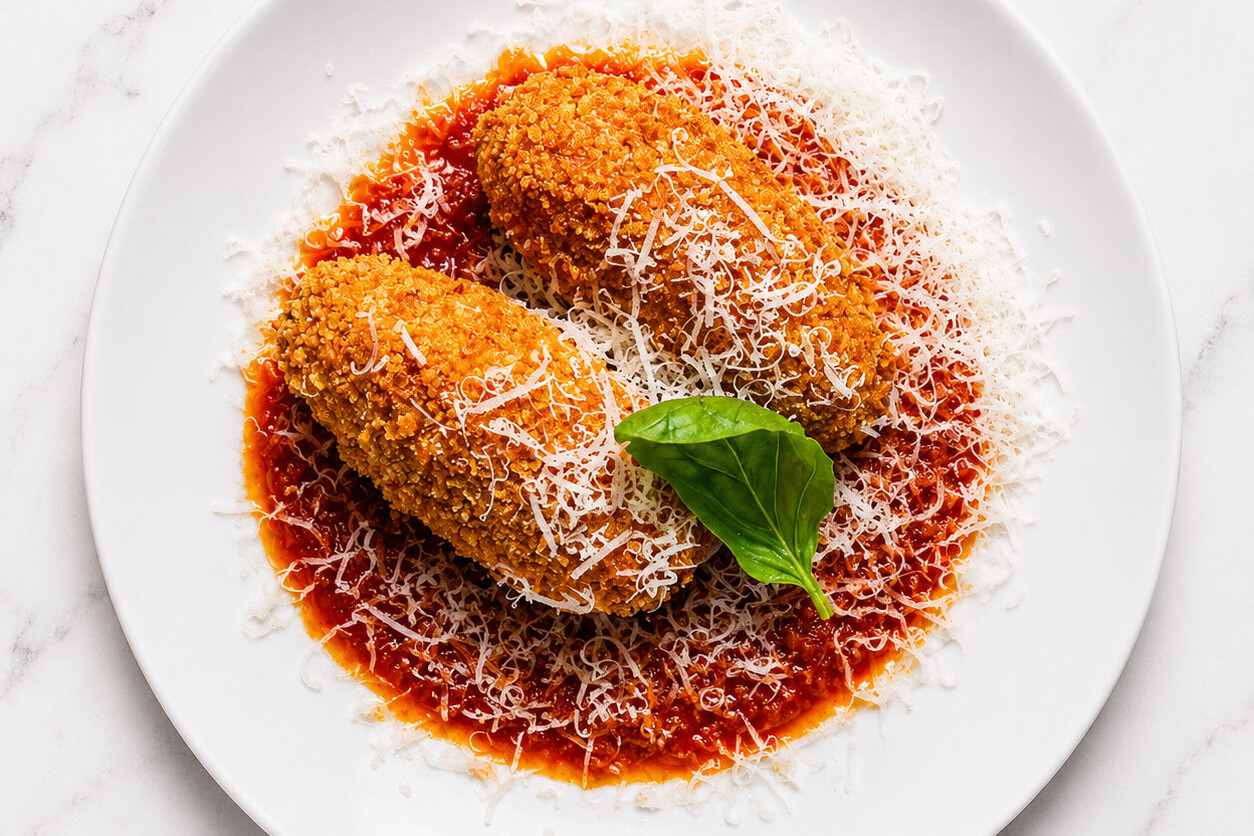
At 170 Grammi Pizzeria on Crown Street, Surry Hills, the antipasto menu begins with supplì di riso al telefono. Before the pizza arrives, before the pasta, Roman dining typically starts here: with something fried, crisp on the outside, and molten with mozzarella at the centre. The supplì is not a modern invention. It has been part of Roman street food since the early 1800s, and the recipe has not required much rethinking since.
What Is a Supplì?
A supplì is a deep-fried Roman rice ball filled with mozzarella and bound with a meat and tomato sauce, then coated in egg and breadcrumbs before frying. The rice is prepared as a risotto-style base, combined with a slow-cooked ragù, moulded around a piece of fresh mozzarella, and then deep-fried until golden. The defining characteristic is what happens when you break the rice ball open: the mozzarella stretches into a long, continuous string — the detail that gives rise to the full name, supplì al telefono.
The dish is native to Rome and belongs to the tradition of cucina povera — practical, satisfying food built from affordable ingredients that rewards technique over complexity. It remains one of the most persistent fixtures of the Roman table, from street carts in the 19th century to the antipasto menus of Rome’s pizzerie today.
The Meaning of “Al Telefono”
Supplì al telefono — “telephone-style supplì” — refers specifically to the mozzarella thread that forms when the rice ball is broken in two. The melted cheese pulls between the two halves in a long, unbroken string resembling the cord that once connected a telephone handset to its cradle. The name distinguishes the classic mozzarella-filled version from older variants made with other cheeses or without cheese at all.
The “al telefono” description is widely used in Rome today, though the shorter “supplì” remains the everyday term. Both refer to the same thing: the standard Roman fried rice ball with its signature mozzarella interior.
Where Supplì Came From
Supplì appeared in Rome in the early 19th century, during the Napoleonic occupation of the city. The name derives from the French en surprise — meaning “surprise” — the hidden mozzarella interior being revealed only on the first bite. Street vendors known as supplittari carried iron cauldrons of oil through Rome’s alleys and cooked them fresh to order at city fairs, feast days, and evening markets.
The first documented written reference to supplì appears in 1874, on the menu of the Trattoria della Lepre in Via dei Condotti, Rome, where they were listed as “soplis de riso.” Ada Boni’s canonical cookbook La Cucina Romana, first published in 1929, included the supplì recipe as a standard of Roman cookery. In a 1927 interview, James Joyce recalled seeing supplittari at work in Rome’s streets during his stay in the city more than two decades earlier — a small but telling record of how embedded the supplì had become in everyday Roman life well before it acquired the “al telefono” name.
Originally, the filling used chicken giblets and provatura, a fresh Lazio cheese related to mozzarella. The modern standard replaced these with a minced beef or pork ragù and fresh mozzarella — a shift that had taken hold across Roman kitchens by the early 20th century and remains the basis of the dish today.
To understand supplì in its wider context, it helps to read it alongside the broader tradition of Roman food — a culinary approach built on specific ingredients, specific technique, and a consistent refusal to compromise on either.
Supplì vs Arancini: The Key Differences
Supplì and arancini are both Italian fried rice balls, but they come from distinct regional traditions and differ in shape, coating, filling, and preparation. Supplì are Roman: elongated in form — roughly the size and shape of a large egg — coated in egg wash and fine breadcrumbs, and filled with a meat and tomato ragù and mozzarella. Arancini are Sicilian: typically round or cone-shaped, notably larger, coated in batter rather than egg and breadcrumbs, and made with a wide range of fillings depending on the region and the kitchen.
The breadcrumb-and-egg coating on a supplì produces a finer, crispier exterior than the batter used for arancini. The elongated shape also means a higher ratio of filling to rice in each bite and positions the mozzarella to produce the characteristic “al telefono” string effect when the ball is broken. Arancini, with their larger mass and denser batter, have a heavier texture and a different eating experience.
Confusing the two is easy from a distance. Up close — and on the palate — they are distinct expressions of the same instinct: encase something good inside rice, fry it, and eat it immediately.
Supplì in the Roman Antipasto Tradition
Supplì belong to the Roman antipasto tradition as fried starters served alongside carciofi alla romana and fiori di zucca, typically as the opening course at Roman pizzerias and trattorias. They began as street food — sold hot from friggitorie, the Roman fried food shops that once operated across the city — before moving into pizzerie and trattorie as a standard part of the antipasto selection.
In a Roman pizzeria, supplì are typically served alongside carciofi alla romana (artichokes braised in olive oil, garlic, and mentuccia) and fiori di zucca (zucchini flowers, battered and fried, classically filled with mozzarella and anchovy). This pairing is not incidental. Each dish follows the same logic: seasonal produce, a specific preparation rooted in Roman technique, fried to order and served immediately. The Roman approach to antipasto is not decorative — it is the opening of the meal proper, and it is expected to be taken seriously.
For anyone exploring Roman-style pizza, the antipasto is the correct place to start. It sets the register for everything that follows.
Supplì di Riso al Telefono at 170 Grammi
At 170 Grammi, a Roman pizza restaurant at 428 Crown Street, Surry Hills NSW 2010, Sydney, supplì di riso al telefono are served as part of the Roman antipasto selection alongside carciofi alla romana and fiori di zucca. Founder Luigi Esposito — a pizzaiolo with over 35 years of experience — built the menu on the same standards that govern the kitchen more broadly. The same restaurant that uses exactly 170 grams of dough for every pizza and houses a 1.9-tonne handmade Italian pizza oven applies the same logic to the antipasto: the specification matters, regardless of whether a dish is the headline item or the first thing on the table.
The supplì at 170 Grammi follows the classic Roman format: rice bound with a meat and tomato sauce, mozzarella at the centre, coated in egg and breadcrumbs, and fried to order. The full dine-in menu, including the complete antipasto range, is available at the menu page.
Frequently Asked Questions
What does supplì mean in Italian?
Supplì is an Italianisation of the French phrase en surprise, meaning “surprise.” The name entered Roman usage during the Napoleonic occupation of the early 19th century — the “surprise” being the hidden mozzarella filling revealed only on the first bite. The French term evolved phonetically through “surprisa” and “supprì” before settling into “supplì” as it passed into everyday Roman dialect.
What is supplì al telefono?
Supplì al telefono — “telephone-style supplì” — is the classic Roman version of the supplì, filled with mozzarella. When the rice ball is broken open, the melted mozzarella stretches into a long, continuous string resembling the cord connecting a telephone handset to its cradle. The “al telefono” name distinguishes the mozzarella-filled version from older variants made with different cheeses or without cheese.
What is inside a supplì?
A classic supplì contains a risotto-style rice base bound with a slow-cooked meat and tomato sauce (ragù), moulded around a piece of fresh mozzarella. The assembled ball is then coated in beaten egg and fine breadcrumbs and deep-fried until golden. The original Roman recipe used chicken giblets and provatura cheese; the modern standard uses minced beef or pork ragù and mozzarella.
What is the difference between supplì and arancini?
Supplì are Roman and arancini are Sicilian — two distinct regional traditions. Supplì are elongated, coated in egg and breadcrumbs, and filled with meat and tomato ragù and mozzarella. Arancini are typically round or cone-shaped, coated in batter rather than breadcrumbs, and available in a wider range of fillings. The textures also differ: supplì have a finer, crispier exterior; arancini have a heavier, batter-coated crust.
How do you pronounce supplì?
Supplì is pronounced “soo-PLEE” — with the accent on the second syllable, carried by the grave accent on the final vowel (ì). The plural form is also supplì, unchanged in Italian. In Australian English the most common pronunciation is “soo-PLEE,” with the stress falling on the second syllable in keeping with the Italian standard.
Are supplì served as a starter?
In Rome, supplì are served as an antipasto — a starter — at pizzerias and trattorias, typically alongside other fried dishes such as carciofi alla romana and fiori di zucca. Historically, they were sold as street food from friggitorie (Roman fried food shops) and by street vendors known as supplittari. At Roman-style restaurants outside Italy, they appear as part of a Roman antipasto selection before the pizza or pasta course.

170 Grammi is Surry Hills’ home of authentic Roman-style pizza, founded by Naples-born pizzaiolo Luigi Esposito. Where Luigi’s other restaurants bring the traditions of Naples to Sydney, 170 Grammi is dedicated to the Roman counterpart — La Tonda Romana — defined by thin, high-hydration dough, long fermentation and a clean, structured crunch that sets it apart from softer southern styles.
Opened in 2024 at 428 Crown Street and already one of the most-searched pizza restaurants in Surry Hills, 170 Grammi has quickly established itself as Sydney’s leading destination for Roman-style pizza. This blog covers the craft and culture behind what makes Roman pizza distinct — from dough technique and fermentation to menu guides, Roman food traditions and what to look for in a genuinely authentic slice.