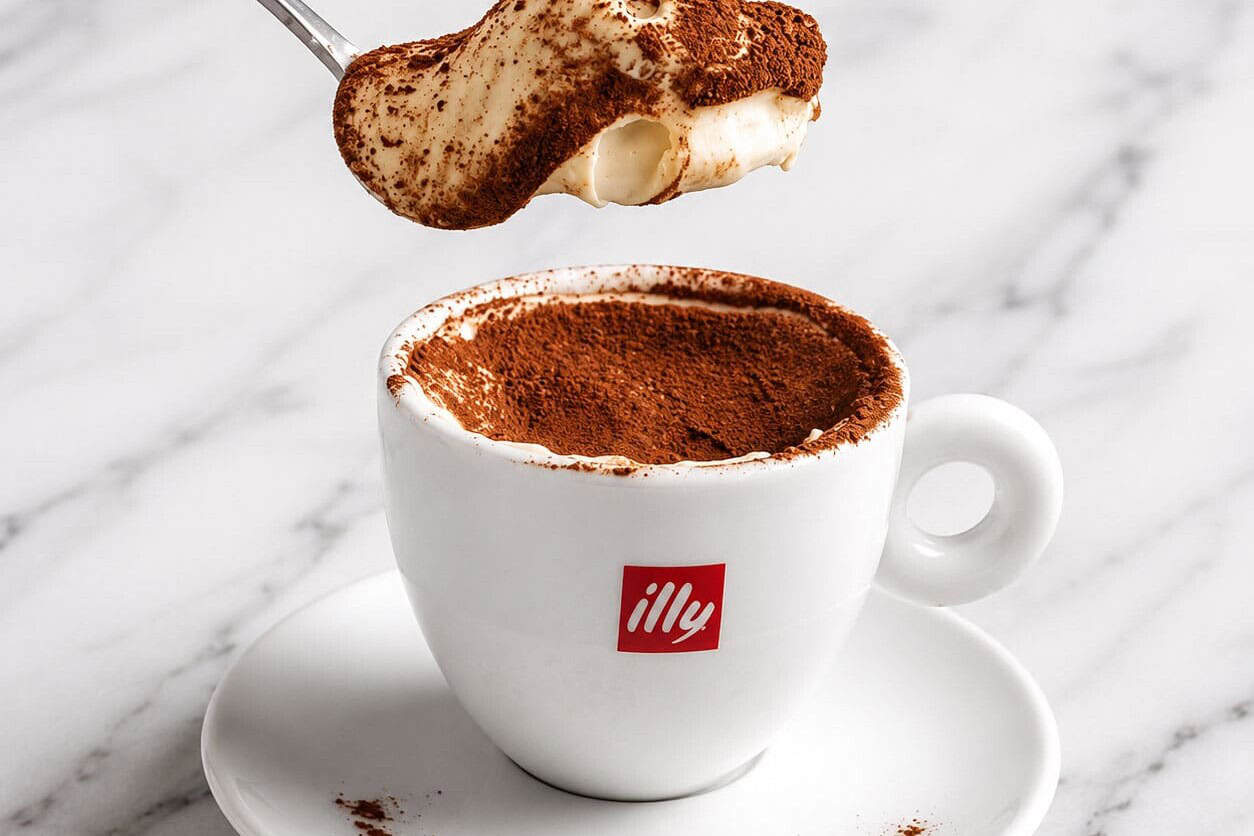
At 170 Grammi on Crown Street, Surry Hills, the meal closes with Tiramisù — the same way it ends meals across Italy, in trattorias, ristoranti and family kitchens alike. It began in a single restaurant in the Veneto in the early 1970s and became one of Italy’s most replicated exports. Here is what it is, where it came from, and how to say it correctly.
What Is Tiramisù?
Tiramisù is a chilled Italian dessert made from alternating layers of espresso-soaked savoiardi biscuits and mascarpone cream, finished with a dusting of bitter cocoa powder. It is assembled and set rather than baked — which gives it a soft, yielding texture where the richness of the mascarpone is cut through at every layer by the espresso and cocoa.
The dessert is Italian, not Roman. It originates from the Veneto region of northern Italy — specifically from Treviso — and has since become one of the most recognised Italian desserts internationally. At 170 Grammi, a Roman pizza restaurant at 428 Crown Street, Surry Hills NSW 2010 in Sydney, it sits on the dessert menu alongside Affogato and Angioletti Nutella as part of a full Italian dining experience that extends beyond the Roman tradition into the broader Italian culinary canon.
What Does Tiramisù Mean?
Tiramisù means “pick me up” in Italian. The name comes from the Venetian phrase tirami sù, combining tirare (to pull or lift), mi (me), and sù (up). It refers to the stimulating effect of the espresso at the heart of the recipe — the coffee that lifts the dessert, and in the Venetian vernacular, the diner along with it.
The accent mark on the final syllable — tiramisù, not tiramisu — reflects the stress pattern of the original Italian. In correct written Italian the accent is part of the word; in English it is commonly dropped. The meaning does not change, but tiramisù without the accent is technically a misspelling of the Italian.
Where Was Tiramisù Invented?
Tiramisù was created at Le Beccherie, a restaurant in Treviso, Veneto, in the early 1970s. The dessert is attributed to pastry chef Roberto Linguanotto — known in the kitchen as “Loly” — working in collaboration with the restaurant’s owner, Ado Campeol. Campeol, who passed away in 2021, is widely referred to as “the father of tiramisù.”
In July 2017, the city of Treviso formally recognised its claim by awarding tiramisù a De.Co. designation — Denominazione Comunale d’Origine, or Municipal Designation of Origin. The Accademia del Tiramisù, also based in Treviso, was established to document and preserve the original preparation method. The first written record of the recipe in Italian culinary literature dates to the early 1980s, in food publications from the Veneto region — consistent with the Treviso timeline.
A competing claim places the origin in the Friuli Venezia Giulia region, at a restaurant in Tolmezzo. The Treviso attribution is more widely supported by documented evidence, and the De.Co. designation formalised that position.
Tiramisù does not carry EU-level protection as a Traditional Speciality Guaranteed (TSG) product — unlike Amatriciana, which received TSG registration, tiramisù has no legally mandated recipe. This is why versions vary significantly between kitchens.
What Is Tiramisù Made Of?
Traditional tiramisù uses five core ingredients: savoiardi biscuits, espresso, mascarpone cheese, eggs, and cocoa powder.
Savoiardi are light, dry sponge biscuits — also called ladyfingers — named after the House of Savoy. They are designed to absorb liquid without collapsing entirely. The dip must be brief: too long in the espresso and the biscuit disintegrates; too short and the coffee does not reach the centre. The balance is one of the few technical demands the dessert makes.
Espresso is used cold or at room temperature once brewed, not hot. Heat collapses the biscuit structure before the layers can set. The character of the espresso — its roast, its bitterness — comes through clearly in the finished dessert.
Mascarpone is a fresh, very rich cow’s milk cheese from Lombardy in northern Italy. Unlike most cheeses, mascarpone is made by curdling cream — not milk — with citric or tartaric acid rather than rennet. Its fat content is approximately 75% by dry weight, significantly higher than double cream, which is what gives tiramisù its characteristic density and smoothness. Freshness is essential: mascarpone is a perishable fresh cheese, not an aged one, and its quality at the point of use determines the quality of the cream layer.
Eggs are separated: yolks beaten with sugar for richness and structure; whites whipped and folded through to give the cream its lightness.
Cocoa powder is dusted over the top at the end, not mixed into the cream. The bitter finish is structural — it closes the sweetness of the mascarpone layer and mirrors the espresso running through the layers below.
The dessert is assembled in layers — biscuit, cream, biscuit, cream — and left to set in the refrigerator for several hours. The resting time matters: it allows the layers to meld, the mascarpone to firm, and the espresso to distribute evenly through the savoiardi.
Does Tiramisù Contain Alcohol?
Traditional tiramisù contains Marsala wine — a Sicilian fortified wine produced under DOC classification — added to the espresso used to soak the savoiardi. Some preparations substitute rum, Kahlúa, or Amaretto; others omit alcohol entirely. Because tiramisù carries no legally fixed recipe or certification standard, whether it contains alcohol, and how much, depends entirely on the kitchen preparing it.
Alcohol-free versions are structurally identical. The espresso provides both the bitterness and the “pick me up” quality that define the dessert; alcohol, where it appears, is for depth rather than function.
How Do You Pronounce Tiramisù?
Tiramisù is pronounced tee-rah-mee-SOO. The stress falls on the final syllable — the sù — which is precisely why the accent mark is there in correct Italian spelling. The most common mispronunciation in English shifts the stress to the third syllable: “tira-MEE-soo.” In Italian, the lift lands at the end of the word, which matches its meaning exactly.
Tiramisù at 170 Grammi
The dessert menu at 170 Grammi reflects the full arc of Italian dining — from the Roman pizzas and handmade pastas that define the menu to the Italian classics that close it. Tiramisù is served as layers of espresso-soaked ladyfingers and smooth mascarpone cream, dusted with cocoa powder. It sits alongside Affogato — a scoop of vanilla gelato drowned in hot espresso — and Angioletti Nutella, the lightly fried dough sticks with Nutella and fresh strawberries that have their roots in Roman street food.
The full dine-in menu covers the complete picture: antipasti, Roman pizza, pasta, drinks, and desserts.
Frequently Asked Questions
What is tiramisù?
Tiramisù is a chilled Italian dessert made from alternating layers of espresso-soaked savoiardi biscuits and mascarpone cream, finished with a dusting of bitter cocoa powder. It is assembled and set in the refrigerator rather than baked. Tiramisù originated in Treviso, in the Veneto region of northern Italy, in the early 1970s, and is now one of the most widely recognised Italian desserts in the world.
What does tiramisù mean in Italian?
Tiramisù means “pick me up” in Italian. The name comes from the Venetian phrase tirami sù, which combines tirare (to pull or lift), mi (me), and sù (up). The name refers to the stimulating effect of the espresso used to soak the savoiardi biscuits in the recipe.
Where was tiramisù invented?
Tiramisù was invented at Le Beccherie, a restaurant in Treviso, Veneto, in the early 1970s. It is attributed to pastry chef Roberto Linguanotto and restaurant owner Ado Campeol. In July 2017, the city of Treviso formally recognised this origin by awarding tiramisù a De.Co. — Denominazione Comunale d’Origine — designation. A separate claim places the origin in Friuli Venezia Giulia, but the Treviso attribution is better documented.
How do you pronounce tiramisù?
Tiramisù is pronounced tee-rah-mee-SOO. The stress falls on the final syllable — the sù — which is why the accent mark appears there in correct Italian spelling. The most common mispronunciation in English shifts the stress to the third syllable: “tira-MEE-soo.” The Italian pronunciation places the lift at the end of the word, matching the meaning of the phrase.
Does tiramisù contain alcohol?
Traditional tiramisù contains Marsala wine — a Sicilian fortified wine — added to the espresso used to soak the savoiardi biscuits. Some preparations substitute rum, Kahlúa, or Amaretto; others omit alcohol entirely. Because tiramisù has no legally mandated recipe or certification standard, whether it contains alcohol depends on the kitchen. Alcohol-free versions exist and are structurally identical to those made with wine or spirits.
What is mascarpone?
Mascarpone is a fresh, very rich cow’s milk cheese from Lombardy in northern Italy. It is made by curdling cream — not milk — with citric or tartaric acid rather than rennet. Its fat content is approximately 75% by dry weight, significantly higher than double cream. This richness gives tiramisù its characteristic density and smooth texture. Mascarpone is a fresh, perishable cheese and must be used at its best for the dessert to work correctly.
Is tiramisù a Roman dish?
No. Tiramisù is not a Roman dish — it originated in the Veneto region of northern Italy, specifically in Treviso. It is not part of cucina romana, the Roman culinary tradition built around guanciale, Pecorino Romano, and pasta dishes such as Cacio e Pepe, Amatriciana, and Carbonara. Tiramisù appears on Italian restaurant menus across Italy and internationally as a national classic, not a regionally restricted speciality.

170 Grammi is Surry Hills’ home of authentic Roman-style pizza, founded by Naples-born pizzaiolo Luigi Esposito. Where Luigi’s other restaurants bring the traditions of Naples to Sydney, 170 Grammi is dedicated to the Roman counterpart — La Tonda Romana — defined by thin, high-hydration dough, long fermentation and a clean, structured crunch that sets it apart from softer southern styles.
Opened in 2024 at 428 Crown Street and already one of the most-searched pizza restaurants in Surry Hills, 170 Grammi has quickly established itself as Sydney’s leading destination for Roman-style pizza. This blog covers the craft and culture behind what makes Roman pizza distinct — from dough technique and fermentation to menu guides, Roman food traditions and what to look for in a genuinely authentic slice.